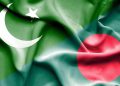

When India and Pakistan meet on a cricket field, the contest is never confined to 22 yards of turf; it carries the sediment of wars, grievances and national pride. The ongoing ICC Men’s T20 World Cup has once again exposed the illusion that sport can be quarantined from politics, and demonstrated that, especially in South Asia, cricket is not merely sport but a diplomatic instrument, an economic lever and a symbolic battlefield. The recent controversy involving India, Pakistan and Bangladesh did not erupt in isolation. It emerged from a climate already thick with mistrust. Bangladesh’s withdrawal from the tournament over security concerns–framed in the context of its post-2024 political instability and reported anti-minority violence–triggered a chain reaction. The ICC rejected the claim of any credible threat and replaced Bangladesh with Scotland. Pakistan, positioning itself as acting in solidarity, responded by threatening to boycott its marquee group-stage fixture against India in Colombo. What followed was not just a sporting disagreement, but a diplomatic standoff conducted through cricket boards.
A Crisis Rooted in Geopolitics
The roots of this episode lie deeper than administrative disagreement. The events of May 2025 fundamentally altered the tenor of India-Pakistan engagement. Unsurprisingly, these sharpened tensions between the two nuclear-armed neighbours spilt into sport. At the Asia Cup later that year, Indian captain Suryakumar Yadav refused pre- and post-match handshakes with Pakistan’s Salman Ali Agha, stating that “a few things in life are ahead of a sportsman’s spirit.” Pakistan protested inconsistent rulings. Haris Rauf’s celebratory gestures referencing fighter jets and mock gunfire were met with Indian complaints. India refused to accept the Asia Cup champions’ trophy from PCB chairman and Pakistan interior Minister Mohsin Naqvi, delaying the ceremony. Even the women’s game saw handshake refusals.
Bangladesh’s domestic instability further complicated matters. The 2024 ouster of Sheikh Hasina, political violence and minority-targeted attacks unsettled the country. When the BCCI terminated Bangladeshi pacer Mustafizur Rahman’s IPL contract in early 2026–a move widely interpreted in Dhaka as politically motivated–Bangladesh retaliated by banning IPL broadcasts. By the time the World Cup approached, cricketing ties as well as geopolitical relations were brittle. Bangladesh’s withdrawal was framed as a safety measure; Pakistan’s boycott threat was framed as solidarity. Yet beneath these statements lay calculations of domestic optics, diplomatic leverage and regional signalling.
The Economics of Rivalry
Crucially, economics magnified the stakes. It is an understatement to say that the India-Pakistan fixture is merely the sporting highlight of a tournament. In the financial architecture of world cricket, it is the linchpin. Estimated to generate around $250 million in broadcast revenue alone, it anchors the ICC’s financial model, which is itself underwritten disproportionately by India’s vast media market. According to multiple reports, had Pakistan followed through with its initial boycott–driven by solidarity with Bangladesh and political posturing–the ICC would likely have faced catastrophic financial consequences. Independent analyses estimated that cancelling the match could have resulted in revenue losses of roughly USD 174 million (around ₹1,576 crore) for the ICC, accounting for broadcast fees, sponsorship, advertising and gate receipts that are almost uniquely tied to this fixture.
It was this geometric effect of financial interdependence that compelled the ICC to lean heavily on the PCB to reconsider. The match’s commercial value far exceeded its sporting value, and its cancellation would have triggered fiscal fallout not just for the global body but also for smaller cricketing nations whose development budgets and match fees depend on ICC revenue redistribution. Cricket’s political economy ensures that certain fixtures carry systemic weight. A walkover in an India-Pakistan match would not simply alter standings; it would destabilise financial expectations across the sport.
Sport as a Negotiating Table
The controversy eventually de-escalated. After urgent meetings between ICC officials, the PCB and government representatives, Pakistan reversed its boycott decision and confirmed participation in the India-Pakistan fixture. Yet the terms of that climbdown are instructive. Reportedly, PCB chairman Mohsin Naqvi placed three conditions during negotiations. First, he demanded greater revenue sharing from the ICC, an assertion about equity, influence and the distribution of power within the sport’s governing structure. Second, Naqvi called for the resumption of bilateral cricket between India and Pakistan to advocate a thaw in diplomatic relations via the sporting route. Third, the PCB insisted that Indian players must shake hands with their Pakistani counterparts during the T20 World Cup. On the surface, this appears to be a plea for sportsmanship. In reality, it was a symbolic demand–a call for public recognition of parity and mutual respect. After months in which handshakes had been refused and gestures weaponised, insisting upon that ritual became a political message about dignity and narrative control.
That Pakistan ultimately backed down under threat of forfeited points and financial penalties does not diminish the significance of those demands. Moreover, the ICC’s handling of the crisis reflects asymmetry. Bangladesh, despite withdrawing, faced no immediate punitive sanction and was even promised consideration for hosting rights before 2031. Critics have described this as a “reward for absence” and a capitulation to financial imperatives. The ICC, for its part, framed the resolution as protecting the tournament’s integrity through dialogue. Both interpretations may be true. What is certain is that cricket administration operated as high diplomacy.
Historical Precedent: The Myth of Sporting Neutrality
South Asia’s entanglement of sport and politics is intense, but it is not unique. The modern Olympic movement itself offers repeated evidence. The 1936 Berlin Olympics were staged by Nazi Germany as a demonstration of state power and ideological supremacy. Architecture, choreography and ceremony were mobilised to craft an image of power and racial hierarchy. On 16 October 1968, at the Mexico City Olympics, American sprinters Tommie Smith and John Carlos mounted the podium after the 200-metre final and raised black-gloved fists during the US national anthem. The silent salute was a protest against racial injustice, poverty and systemic discrimination in the United States. The International Olympic Committee condemned the gesture as political defiance, and the athletes faced severe repercussions. Yet history remembers the raised fists not as a breach of sporting decorum, but as one of the most powerful moral statements of the twentieth century. Four years later, the 1972 Munich Olympics shattered any lingering illusion of neutrality. The murder of Israeli athletes by the Palestinian group Black September turned the Olympic Village into a geopolitical flashpoint, an act that broke the notion of the Games as an apolitical sanctuary.
Half a century later, the war in Ukraine has produced similar tensions. Russia’s exclusion from competing under its national flag following the invasion of Ukraine has illustrated how sport functions as a mechanism of international sanction. Earlier this month, Ukrainian skeleton racer Vladyslav Heraskevych was disqualified from heats after insisting on wearing a banned helmet as a tribute to Ukrainian athletes killed in the conflict. At the recent Australian Open, in the semifinal between Belarus’s Aryna Sabalenka and Ukraine’s Elina Svitolina, there was no post-match handshake. Before the match at Rod Laver Arena, spectators were formally informed via announcement that there would be no handshake and were asked to respect the decision. The scoreboard and broadcast framing reinforced it. Sabalenka and Svitolina deliberately remained apart during pre-match formalities and photographs. No announcement would have been required. The players could simply have walked past one another. Instead, the moment was amplified. That amplification matters. It transformed a personal act of political distancing into a collective, televised statement. The absence of a handshake became as performative as any salute. The sport did not merely accommodate politics; it curated it.
Even in football, the world’s most globalised sport, geopolitics intrudes. For instance, as the Trump administration prepares for the United States to co-host the upcoming World Cup, segments of the global football community have openly expressed concern. Calls of “Stay away from the USA!” have emerged in response to visa uncertainties and political rhetoric, urging viewers to follow the tournament on their TVs instead. The irony is striking: while sporting exceptions are being carved out to facilitate the tournament, broader immigration policy remains restrictive. Sport is selectively insulated when commercially necessary, but never truly detached from state policy.
The 2022 FIFA World Cup in Qatar offered an even starker illustration. Awarded hosting rights in 2010 despite limited football pedigree and a population smaller than many global cities, Qatar embarked on a $300 billion transformation of Doha. Nearly two million migrant workers–overwhelmingly from South Asia–comprised roughly 95 per cent of the country’s labour force. Human rights organisations documented long working hours, extreme heat exposure, restricted access to water, hazardous conditions and cramped accommodation. While tournament organisers initially cited 40 deaths linked to preparations, World Cup chief Hassan Al-Thawadi later acknowledged figures closer to 400-500. The Qatar tournament was not merely about football. It became a referendum on labour rights, migrant exploitation, global inequality and the moral cost of spectacle.
If one needed a stark reminder of how politics and violence can penetrate even the most cherished sporting rituals, the March 2009 terrorist attack on the Sri Lankan national cricket team in Lahore stands as a haunting monument. On that morning, as the visiting side’s convoy made its way to Gaddafi Stadium to play the second Test against Pakistan, terrorists, reportedly belonging to Lashkar-e-Jhangvi (LeJ), opened fire on the team bus. Six Pakistani policemen and two civilians were killed, and several Sri Lankan players were wounded in an ambush. International teams refused to tour Pakistan for years thereafter, driven by legitimate fears for player safety. Pakistan was effectively declared a no-go zone for international cricket, hosting most of its “home” matches in the United Arab Emirates for over a decade. The 2011 Cricket World Cup was reshaped in its wake; Pakistan was stripped of its hosting rights, losing out on matches that had been scheduled for Lahore. The attack underscored that sport cannot be isolated from the political realities of the region–that existential threats to the state and society can, and do, breach the boundary ropes. Even more telling is the symbolic invocation of that attack in the current T20 World Cup controversy. In early February 2026, Sri Lanka Cricket sent a letter to the Pakistan Cricket Board reminding it of that dark chapter, emphasising how security failures once drove global cricket away from Pakistani soil for years.
These episodes underline a recurring pattern. Sport is not merely a mirror of society; it is often a stage upon which societies negotiate moral and political questions. Athletes, as citizens, carry their nations’ triumphs, traumas and grievances into arenas that command global attention. In South Asia, cricket occupies this role with particular intensity. The India-Pakistan rivalry is not just competitive; it is historical. Partition, multiple wars over the decades, recurring crises in Kashmir and cycles of cross-border terrorism form a living backdrop to every time India and Pakistan meet on the field. When captains refuse handshakes or when boards threaten boycotts, they are operating within this continuum. Cricket tours are suspended after attacks; visas become diplomatic tools; and venues are shifted to neutral territories. Each fixture is negotiated not just by boards but by governments.
The Real Question
In this context, calls to “keep politics out of sport” ring hollow. One might argue that sport offers a rare bridge, a channel for engagement when diplomatic dialogue stalls. Indeed, cricket diplomacy has periodically thawed relations, as in the tours of the early 2000s. Yet even these gestures are political acts. They signal intent, de-escalation or strategic goodwill. The absence of cricket is political; so too is its presence. The lesson from Berlin, Munich, Mexico City and contemporary Ukraine is not that sport should be politicised, but that it inevitably is. The real debate, therefore, is misplaced. The question is not whether politics belongs in sport. The evidence suggests it has always been there. The more honest recognition is that sporting arenas amplify political identity precisely because they command such emotional and symbolic power. Cricket in South Asia functions in the same way. It is not an escape from politics; it is one of its most visible expressions.
The current T20 World Cup controversy ultimately resolved without the catastrophic collapse many feared. The India-Pakistan match will be played. The tournament proceeds. The crowd will roar. But the episode has reaffirmed a structural reality: in South Asia, cricket is not merely a pastime. It is a site of national assertion, economic power and symbolic contestation. To pretend otherwise is to misunderstand both politics and sport. Politics is about identity, power and collective emotion; sport, especially cricket in the subcontinent, embodies precisely these elements.
The World Cup will produce winners and losers on the field. Yet, the deeper lesson of this controversy is not about points tables or sanctions. It is about the persistent, inescapable convergence of the stadium and the state. In South Asia, the scoreboard does not end at the final over. It extends into parliaments, newsrooms and streets–and long after the floodlights dim, the politics of the game continues to play on.