
Introduction: The Role Of Outer Space In Warfare
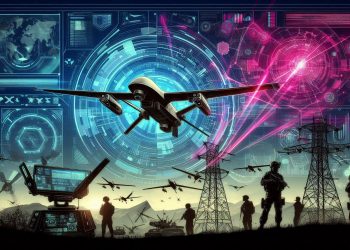
The 21st Century has seen the increasing centrality of the space domain to Modern Multi-Domain Military Operations. Space-based assets no longer act as just a force multiplier, but have become the key pillar on which a range of military tasks are carried out, from C4ISR, operating Unmanned Vehicles to Precision Strikes. It is in this context that the increasing vulnerability of space-based assets has been highlighted, with the development of Kinetic Anti-Satellite (ASAT) systems, ranging from Earth-based ASAT missiles to Co-orbital ASAT Systems, along with Non-Kinetic Methods such as Directed Energy Weapons (DEWs) and Electronic Jamming. Thus, militaries around the world have conceptualised the emergence of space as a future warfighting domain.
The Space Domain is central to the PLA’s warfighting concept of “Intelligentised Warfare”, which integrates data and modern communications, reliant on its space-based assets, to every level of its warfighting capability. The PLA views any future military conflict as not just a confrontation between opposing militaries, but as a battle between ‘systems’, encompassing military, industrial, technological and political domains as well. To that end, the protection of its space assets becomes crucial to ensure its ability to conduct operations across Land, Air, Sea, as well as the cognitive and information domains.
Chinese Military Literature on Outer Space
It is in this context that authoritative Chinese sources such as its Defence White Papers, the Science of Military Strategy 2020 (SMS 2020), published by the PLA’s Academy of Military Sciences (AMS), and the AMS’ Lectures on the Science of Space Operations (SSO 2012), guides the strategic, operational and tactical aspects of the space domain respectively. In addition, analyses of writings by PLA Scholars on the subject, particularly in light of the use of Space in the Russia-Ukraine war, also help to understand how the PLA thinks about the subject.
China’s 2019 Defence White Paper explicitly states the safeguarding of China’s security interests in outer space, electromagnetic space and cyberspace, as one of China’s fundamental national defence aims. It views Outer Space as a critical domain in what it labels ‘International Strategic Competition’, adding that “Threats to outer Space and cyber security loom large”, and explicitly naming the United States as having instigated competition in various strategic realms, with outer space being one of them. China’s 2025 Defence White Paper adds onto this foundation, noting that “Security issues in space, etc., are rapidly emerging”, with space being included as a key subject in its ‘Overall National Security Outlook’, which it describes as the ‘Soul’ of China’s National Security.
SMS 2020, the PLA’s seminal guide on all aspects of warfare, spares no small effort in detailing the characteristics of a future conflict in space, which it explicitly states as being inevitable. It views space power as the “Glue of Modern Military Power”, noting that in its conceptualisation of war as a confrontation of systems, the loss of information from its space-based assets would mean a collapse of its battle lines and the paralysis of its entire system of waging war. Thus, it determines the attainment of space superiority as the core objective of any conflict in space, in order to prevent a domino effect that would result in loss of Information, Air, Sea and Land superiority respectively.
SMS 2020 described the future battlefield in space as being one that lacks the well-defined geographical theatres usually associated with conflict on Earth. In addition, the tech-intensive nature of accessing space means that any conflict in space will be heavily influenced by international alliances and partnerships, with technological superiority being the essence of Space competition. Another challenge it notes is the dual-use nature of space assets, with its assertion that more than 95% of space assets have military applications, which further complicates discriminating between civilian and military targets.
Regarding the actual use of force in the Space Domain, SMS 2020 makes it clear that the priority must be given to ensuring a deterrent ability, with war in space only as a last resort. To achieve this deterrence, it advocates the use of both offensive and defensive space operations. Through these actions, it seeks to maintain the initiative in any scenario by being able to set the tempo of operations and control the pace of escalation and de-escalation.
SMS 2020 finally goes on to lay out a guide to dictate the capabilities required to achieve the objectives it has set out for itself. These include the development of capabilities aimed to providing spatial information and ISR to ground systems, capabilities that ensure what the PLA terms ‘Space Control Ability’, comprising of Space Situational Awareness, soft and hard kill systems, along with what it terms as ‘Space Defence Ability’, encompassing a gamut of activities ranging from making satellite design stealthy, ensuring the security and encryption of its communications, along with concealing its orbit and other deception methods. In addition, the development of space-to-ground attack systems has also been suggested. In addition to these technical aspects, SMS 2020 also suggests measures to strengthen the training of space warfare officers, along with legal measures intended to address the gaps in the existing body of international space law.
SSO 2012 is one of the PLA’s core teaching materials for post-graduate level professional military education, and the first comprehensive PLA guide to space operations theory. It predicts the evolution of the military use of space to closely mirror the trends followed by the evolution of air power. Just as air power was first used for reconnaissance duties, followed by the dawn of air-to-air combat, and culminating in the development of ground attack and heavy strategic bomber aircraft, it predicts the same unfolding in space, first through its already proven use for C4ISR duties, followed by a struggle for the control of space, culminating in the deployment of space assets that could provide orbital based firepower against targets on earth, with the ability to carry out strikes on strategic-level objectives as well. As part of this transition, the PLA envisions the development of 4 specific types of space warfare units, namely, Space Tracking Units, responsible for ISR and SSA, Space Offensive Operations Units, to attack targets across land, sea, air and space, Space Defensive Operations Units, to intercept ICBMs and ASAT weapons, and Space Logistics Support Units.
SSO 2012 highlights the way space assets have sped up decision cycles in war. However, it makes it clear that these cycles will further speed up, with space-based weapon systems, be they kinetic or directed energy systems, being able to strike targets much faster and effectively reducing the relevance of concepts such as territorial size and strategic depth. It directly quotes JFC Fuller and his theory of ‘War of the Mind’, with a stress on space-based systems that allow one to attack the enemy’s C2 systems and conduct psychological operations, over more traditional battlefield confrontations.
Other works by PLA scholars, published across a range of sources, build up on this framework laid out by authoritative PLA documents. PLA scholars now view space-based assets as the ultimate strategic deterrent, more so than even a nuclear deterrent. An interesting proposal also laid out the possibility of using space-based systems as a form of long-range, high-speed logistics to supply remote outposts. Thinking on escalation also follows the same deterrence-based trends outlined in SMS 2020, with scholars emphasising ‘space blockades’, cyber and electromagnetic attacks, and limited deterrent strikes on C2 nodes, to avoid striking critical enemy systems and avoid escalation.
The proliferation of Starlink has brought about a particularly high level of anxiety amongst PLA scholars, with Chinese Military viewing it as not just a commercial endeavour, but part of a deliberate U.S policy of Civil-Military Integration, and has also brought Low Earth Orbit back into the forefront of Chinese Space discourse. Starlink’s role in Ukraine has also brought about discourse in Chinese military circles about how to deal with what they call “Asymmetric Transparency”, where the Russian Side has been placed in a position of continuous exposure while Ukrainian activities remain only ‘semi-transparent’ to the Russians. The sheer scale of the Starlink network, along with the less escalatory nature of such systems, has brought about a preference for soft-kill ASAT systems amongst PLA scholars, along with renewed calls to get a Chinese equivalent to Starlink operationalised at the earliest.
Conclusion & Implications for India
Chinese military thinking on space, for the foreseeable future, hinges upon ensuring a deterrent capability against U.S activities in Space. Nevertheless, the capabilities it relies upon for deterrence can also be used for offensive purposes, thus potentially affecting Indian interests in Space. The Chinese focus on deterrence, in part, is due to its lagging behind the United States in Space Technology, and unwillingness to start an Arms race it cannot win. In the future, should China feel confident about winning a possible arms race in space, it might embark on putting into practice its theories about Space Warfare. India, with the vast gap in capabilities it faces in the Space Domain, cannot afford to engage in an arms race in space. Thus, it must look for asymmetric solutions to ensure a basic deterrent ability, via the development of a small number of soft and hard kill systems, capable of threatening prestige targets in space, such as China’s Space Station, combined along with land attack systems that could threaten its Space support infrastructure and C2 nodes. Again, the emphasis must be on developing methods to avoid escalation, with India’s No First Use in the nuclear domain, providing a framework that could possibly be adapted for use in Space as well.