Friday, December 12, 2025
Advertise with us
Support us
Write for us
No Result
View All Result
claws
  • Home
  • About Us
    • Director General
    • Additional Director General
    • Jottings by Director General Emiritus
    • CLAWS Membership
    • Faculty
  • Publication
    • Web Articles
    • Issue Briefs
    • Manekshaw Papers
    • Newsletter
    • CLAWS Journal
    • Scholar Warrior
    • Books
    • Essay
    • Intern Articles
    • External Publications
  • Research Areas
    • Global & Regional Security
      • China
      • Pakistan
      • Afghanistan
      • South Asia
      • Indo Pacific
      • US, EU & Russia
      • MENA
      • CAR
    • National Security
      • National Security Strategy
      • Nuclear Deterrence
      • Non Traditional Threats
      • Intelligence
      • Terrorism & Internal Security
      • Grey Z & IW
      • Security Laws
    • Military Studies
      • Military Doctrine
      • Military Strategy
      • Peace Keeping Ops
      • Military History
      • Military Logistics
      • Out of Area Contingency Ops
      • Leadership
    • Military Technology & Defence Acquisition
      • Military Technology
      • Defence Acqn
      • Budgets & Finance
      • Defence Infrastructure
      • Human Resources
    • Multi Domain Studies
      • Jointmanship & Integration
      • Space
      • Cyber
      • Spl Operations
      • Energy & Environment
      • Defence Eco System
      • Defence Diplomacy
      • HADR
  • Web Archive
  • Events
    • Seminars
    • Webinars/RTD
  • PROMEX
  • University Cell
    • About The Initiative
    • Admission: Eligibility and Procedure
    • Guides | Supervisors in the PhD Programme:
    • Important Information
    • Administration
  • Careers
  • Contact
  • Home
  • About Us
    • Director General
    • Additional Director General
    • Jottings by Director General Emiritus
    • CLAWS Membership
    • Faculty
  • Publication
    • Web Articles
    • Issue Briefs
    • Manekshaw Papers
    • Newsletter
    • CLAWS Journal
    • Scholar Warrior
    • Books
    • Essay
    • Intern Articles
    • External Publications
  • Research Areas
    • Global & Regional Security
      • China
      • Pakistan
      • Afghanistan
      • South Asia
      • Indo Pacific
      • US, EU & Russia
      • MENA
      • CAR
    • National Security
      • National Security Strategy
      • Nuclear Deterrence
      • Non Traditional Threats
      • Intelligence
      • Terrorism & Internal Security
      • Grey Z & IW
      • Security Laws
    • Military Studies
      • Military Doctrine
      • Military Strategy
      • Peace Keeping Ops
      • Military History
      • Military Logistics
      • Out of Area Contingency Ops
      • Leadership
    • Military Technology & Defence Acquisition
      • Military Technology
      • Defence Acqn
      • Budgets & Finance
      • Defence Infrastructure
      • Human Resources
    • Multi Domain Studies
      • Jointmanship & Integration
      • Space
      • Cyber
      • Spl Operations
      • Energy & Environment
      • Defence Eco System
      • Defence Diplomacy
      • HADR
  • Web Archive
  • Events
    • Seminars
    • Webinars/RTD
  • PROMEX
  • University Cell
    • About The Initiative
    • Admission: Eligibility and Procedure
    • Guides | Supervisors in the PhD Programme:
    • Important Information
    • Administration
  • Careers
  • Contact
No Result
View All Result
CLAWS
No Result
View All Result
Home External Publications

Drone-age warfare: Why Indian Army must command the air littoral battlespace

Lt Gen Dushyant Singh PVSM, AVSM (Retd).byLt Gen Dushyant Singh PVSM, AVSM (Retd).
December 10, 2025
in External Publications
A A
0
Post Views: 43

Originally Published: https://www.firstpost.com/opinion/drone-age-warfare-why-indian-army-must-command-the-air-littoral-battlespace-13958553.html

The air littoral is no longer the exclusive domain of air forces. It is a shared battlespace where ground forces must lead in areas of direct contact.

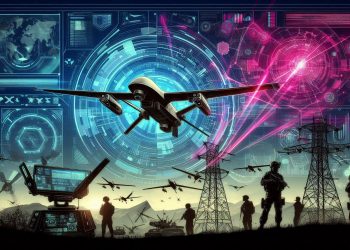
In the evolving landscape of modern warfare, the air littoral—the vertical battlespace from ground level up to approximately 3,000 metres—has become the most contested zone. Saturated with drones, loitering munitions, and short-range air defence systems, it is the layer where ground forces are most vulnerable. For India, with the Army already engaged in active deployments along the Line of Control (LoC) and Line of Actual Control (LAC), the case for Army-led control of this battlespace is not just doctrinal—it is existential.

The Proximity Argument

Indian Army units deployed in forward areas are the first exposed to hostile drone swarms, loitering munitions, and aerial reconnaissance. These threats can materialise within seconds of escalation—often without a formal declaration of hostilities. Waiting for centralized airspace clearance or inter-service coordination could prove fatal.

  • Force preservation becomes the first casualty if soldiers cannot respond instantly.
  • A surprise ground thrust, supported by aerial ISR, could overwhelm defensive positions before countermeasures are authorised.
  • Example: Along the LAC, a swarm of loitering munitions launched across the ridge could devastate Indian bunkers. If the Army lacks authority to engage autonomously, delays in clearance could result in catastrophic losses.

Tactical Autonomy: Decision at the Edge

Today’s soldier is not just a combatant but a node in a sensor–shooter network. Infantrymen and armoured crews are increasingly equipped with handheld or vehicle-mounted counter-UAV systems—jammers, kinetic interceptors, and drone-on-drone capabilities.

This distributed battlespace demands real-time classification of aerial threats:

  • A quadcopter hovering over a tank column may be a spotter drone for artillery → it must be neutralized immediately.
  • A high-altitude UAV flying beyond engagement range may be part of strategic ISR → engagement may be withheld.
  • Such decisions cannot be outsourced to distant command centres. They must be made by commanders at the edge, based on proximity, mission criticality, and rules of engagement.

International Precedents: A Shifting Milieu

Globally, militaries are rethinking airspace control in the tactical zone:

  • Ukraine Conflict: Ukrainian ground units routinely engage Russian drones without centralized clearance, using MANPADS and EW kits.
  • Israel: The IDF empowers ground commanders to autonomously engage low-altitude threats in urban and border operations.
  • US Army: The Multi-Domain Operations (MDO) concept explicitly includes Army-led control of the air littoral for force protection and manoeuvre.

These examples underscore a growing recognition: the air littoral is no longer the exclusive domain of air forces. It is a shared battlespace where ground forces must lead in areas of direct contact.

Toward Integrated Theatre Commands

While the Army’s case for air littoral control is compelling, the long-term solution lies in integrated theatre commands. These structures dissolve inter-service silos and empower joint commanders with domain-specific control based on mission needs.

  • Army: Controls the air littoral over land-based operations.
  • Navy: Manages the air littoral over littoral waters and carrier groups.
  • Air Force: Retains strategic airspace control and deep-strike capabilities.

This model ensures unity of command, rapid decision-making, and seamless integration of sensors and shooters across domains.

Conclusion

India’s security environment demands agility, autonomy, and integration. The Army, being the first responder and primary stakeholder in land-based operations, must command the air littoral battlespace. This is not a turf war—it is a doctrinal necessity rooted in operational logic.

As hybrid threats proliferate and the grey zone expands, India must evolve a joint doctrine that empowers the Army to defend its troops, preserve its force, and dominate the vertical battlespace it inhabits. The air littoral is tomorrow’s Kurukshetra—and the Army must hold the reins.


Tags: AIWarfareCounterDroneDroneDominanceElectronicWarfareLoiteringMunitionsMilitary TechnologySHORADUAVs
Previous Post

A Strategy Based Doctrine: Opportunities for a Future-Ready Indian Army

Next Post

India’s Strategic Pathin Light of Russia – Ukraine War

Lt Gen Dushyant Singh PVSM, AVSM (Retd).

Lt Gen Dushyant Singh PVSM, AVSM (Retd).

Next Post
India’s Strategic Pathin Light of Russia – Ukraine War

India’s Strategic Pathin Light of Russia - Ukraine War

Leave a Reply Cancel reply

Your email address will not be published. Required fields are marked *

Support Us Donate Now

Web Updates

CLAWS MAHE PHD Pgme I Batch 8 Shortlisted Candidates

FMMEC 2025 | Essay Competition | Results

IIFOMAS | CLAWS | Essay Competition

Guidelines to Publish with CLAWS

Summer Internship Capsule 2025

Application Form – Study Mtrl for DSSC 2025

  • Trending
  • Comments
  • Latest
Russia-Ukraine War: Lessons from an Electronic Warfare (EW) Perspective

Russia-Ukraine War: Lessons from an Electronic Warfare (EW) Perspective

May 31, 2025
Results | Field Marshal Manekshaw Essay Competition – 2024

Field Marshal Manekshaw Essay Competiton 2025

May 23, 2025

Summer Internship Capsule 2025

April 8, 2025
From Sword Clashes to Drone Strikes: A History of Changing Battlefields

From Sword Clashes to Drone Strikes: A History of Changing Battlefields

July 31, 2025
From Sword Clashes to Drone Strikes: A History of Changing Battlefields

From Sword Clashes to Drone Strikes: A History of Changing Battlefields

15
The Arakan Army and Its Impact on India: Rising Tensions Along the Eastern Frontier 

The Arakan Army and Its Impact on India: Rising Tensions Along the Eastern Frontier 

5
The Primacy of Mind in Modern Conflict: Defending India Against Disinformation and Cognitive Warfare

The Primacy of Mind in Modern Conflict: Defending India Against Disinformation and Cognitive Warfare

3

Front Organisations: The Valley’s Homegrown ‘Resistance’ or Pakistan’s Evolving Terrorism Tactics?

2
India’s Strategic Pathin Light of Russia – Ukraine War

India’s Strategic Pathin Light of Russia – Ukraine War

December 10, 2025
Drone-age warfare: Why Indian Army must command the air littoral battlespace

Drone-age warfare: Why Indian Army must command the air littoral battlespace

December 10, 2025
A Strategy Based Doctrine: Opportunities for a Future-Ready Indian Army

A Strategy Based Doctrine: Opportunities for a Future-Ready Indian Army

December 5, 2025

CLAWS MAHE PHD Pgme I Batch 8 Shortlisted Candidates

December 5, 2025

Popular Stories

  • Russia-Ukraine War: Lessons from an Electronic Warfare (EW) Perspective

    Russia-Ukraine War: Lessons from an Electronic Warfare (EW) Perspective

    0 shares
    Share 0 Tweet 0
  • Field Marshal Manekshaw Essay Competiton 2025

    0 shares
    Share 0 Tweet 0
  • Summer Internship Capsule 2025

    0 shares
    Share 0 Tweet 0
  • From Sword Clashes to Drone Strikes: A History of Changing Battlefields

    0 shares
    Share 0 Tweet 0
  • Op Sindoor 2.0: Why & How India Must Prepare for the Next Round?

    0 shares
    Share 0 Tweet 0

About us

CLAWS

The Centre for Land Warfare Studies (CLAWS), New Delhi, India is an independent think tank on strategic studies and land warfare. The mandate of CLAWS covers national security issues, conventional military operations and sub-conventional warfare.

Follow Us

Browse by Category

  • Articles
  • Autumn 2019
  • Autumn 2020
  • Books
  • CLAWS Focus
  • CLAWS Journal
  • Essay
  • Events
  • External Publications
  • FMMEC
  • Intern Articles
  • Issue Briefs
  • Jottings by Director General Emiritus
  • Manekshaw Papers
  • Newsletter
  • Round Tables
  • Scholar Warrior
  • Seminars
  • Uncategorized
  • Web Updates
  • Winter 2019
  • YouTube Podcast

Recent News

India’s Strategic Pathin Light of Russia – Ukraine War

India’s Strategic Pathin Light of Russia – Ukraine War

December 10, 2025
Drone-age warfare: Why Indian Army must command the air littoral battlespace

Drone-age warfare: Why Indian Army must command the air littoral battlespace

December 10, 2025
  • Site Map
  • Tenders
  • Advertise With Us
  • Terms of use
  • Privacy Policy
  • Other Think Tanks

© 2008-2024 Centre for Land Warfare Studies (CLAWS).

No Result
View All Result
  • Home
  • About Us
    • Director General
    • Additional Director General
    • Jottings by Director General Emiritus
    • CLAWS Membership
    • Faculty
  • Publication
    • Web Articles
    • Issue Briefs
    • Manekshaw Papers
    • Newsletter
    • CLAWS Journal
    • Scholar Warrior
    • Books
    • Essay
    • Intern Articles
    • External Publications
  • Research Areas
    • Global & Regional Security
      • China
      • Pakistan
      • Afghanistan
      • South Asia
      • Indo Pacific
      • US, EU & Russia
      • MENA
      • CAR
    • National Security
      • National Security Strategy
      • Nuclear Deterrence
      • Non Traditional Threats
      • Intelligence
      • Terrorism & Internal Security
      • Grey Z & IW
      • Security Laws
    • Military Studies
      • Military Doctrine
      • Military Strategy
      • Peace Keeping Ops
      • Military History
      • Military Logistics
      • Out of Area Contingency Ops
      • Leadership
    • Military Technology & Defence Acquisition
      • Military Technology
      • Defence Acqn
      • Budgets & Finance
      • Defence Infrastructure
      • Human Resources
    • Multi Domain Studies
      • Jointmanship & Integration
      • Space
      • Cyber
      • Spl Operations
      • Energy & Environment
      • Defence Eco System
      • Defence Diplomacy
      • HADR
  • Web Archive
  • Events
    • Seminars
    • Webinars/RTD
  • PROMEX
  • University Cell
    • About The Initiative
    • Admission: Eligibility and Procedure
    • Guides | Supervisors in the PhD Programme:
    • Important Information
    • Administration
  • Careers
  • Contact

© 2008-2024 Centre for Land Warfare Studies (CLAWS).