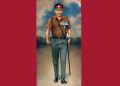

A General’s Odyssey: Giving Up is Not an Option, Lt Gen V.K. Ahluwalia, Pentagon Press, New Delhi, 2025, ISBN 978-81-984458-9-6
Lt Gen V.K. Ahluwalia’s A General’s Odyssey: Giving Up is Not an Option is an Memoir that traces his life across multiple institutions, beginning with a vulnerable cadet phase and ending in post-retirement public, policy, and corporate responsibilities. Organised in five parts, the book mirrors a widening arc from soldiering to stewardship, showing how operational experience gradually expands into institutional leadership, ethical judgement, and strategic reflection. I read the memoir with an added layer of familiarity because Gen Ahluwalia served as Director General of the Centre for Land Warfare Studies when I joined CLAWS as a Research Assistant, and the book helps explain how his habits of leadership, fairness, and institutional discipline were formed.
In Part I, “Defining Moments” the author locates his earliest discipline in a family of seven siblings where he was fourth in line. He recounts being sent with his elder brother to the rural village of Shahzadpur in Ambala to live with grandparents, and he credits that period with cultivating a love for knowledge and a habit of daily discipline that later resembled military routine. A memorable portrait emerges of his grandmother, who lacked formal literacy yet insisted on education. He quotes her advice to “look beyond horizon with a positive mindset” as a formative instruction in optimism under constraint, and he describes how she sought upward mobility for him through Sainik School.
On arriving at the Sainik School Gen Ahluwalia recalls becoming the subject of ridicule for attempting to converse in English. He credits the faculty for turning that discomfort into a rite of passage, and he shows how mentoring can convert humiliation into growth without lowering standards. He writes of an appetite for adventure and outdoor challenge, which later finds expression in demanding experiences such as the Advanced Leadership Course at Pahalgam and training at the Himalayan Mountaineering Institute in Darjeeling. He carries that academic and leadership momentum into the National Defence Academy, where he describes himself as a high performer, and he frames early achievement as powerful but fragile when identity is tethered to merit.
The emotional centre of Part I is the BPET injury. A serious knee injury becomes the moment when a bright trajectory nearly ends through physical limitation and institutional judgement. He writes that he was once declared unfit for the Army. He presents that verdict as traumatic because it threatened not only a career but a self-image built on performance. He records the shock of being relegated as a “weak” Gentleman Cadet after being a top scorer, and he captures how quickly a training system can shift from celebration to stigma. He reflects that during formative years there exists a deep-seated longing for achievement, and he suggests that ambition can be legitimate when it does not disregard companionship. This becomes his doorway into understanding friendship, and into seeing how moral courage in seniors can alter outcomes.
He writes of Col R.S. Pannu was the person who advocated his case and pushed for review of the relegation until he was reinstated into his original course. He turns that rescue into a leadership lesson: it is important to support the legitimate aspirations and concerns of those under one’s command, because careers can be altered by decisions made in moments of pressure. He makes the point operational by stating that as one grows up the ladder one should empower others who want to grow up the ladder, and the memoir repeatedly returns to this ethic of advocacy rather than mere supervision.
Two weeks before passing out, he was declared medically fit, yet he could not participate in the parade and did not cross the “antim pag” with his coursemates, which he treats as a rare and painful exception in a system built on shared milestones. He later notes the irony that he became the sole individual from his original NDA course, the 39th course, to rise to the position of GOC-in-C, which makes the early “unfit” verdict look like a narrow gate he refused to accept as destiny.
He chose to keep the injury private as he advanced, avoiding undue sympathy because he wanted to be judged on performance and responsibility rather than pain. He refused to seek disability pension at retirement, a decision that reads as personal principle but also as a window into a military culture where many choose silence to remain professionally unencumbered. He later shared his story publicly only when he served as DG Military Training, describing how he spoke to faculty at the Indian Military Academy and the Officers Training Academy in Chennai with a suggestion to exhaust every option before relegating any cadet..
Part II moves into commissioned life and field responsibility, and it begins with the author describing how, as a second lieutenant, he was advised to maintain a low profile and abstain from expressing opinions. He saw this as a tradition that trains obedience but can suppress professional candour, and he disliked the habit of some senior officers making snide remarks for pleasure. He presents this not merely as personal dislike but as a leadership flaw that corrodes confidence and discourages initiative in young officers. He resolved that once vested with authority he would endeavour to eradicate such archaic practices, and later chapters show him trying to build command climates that are strict yet fair.
Part II also expands operations beyond gunfire and into institutional imagination through Operation Green Curtain, later renamed Operation Green Kargil. The idea begins with his irritation that enemy posts had watched Indian movements for ages and he asks what India was doing about it. He converts that frustration into a practical concept: planting trees along selected stretches of highway to screen movements and reduce enemy observation. The proposal was met with scepticism because Kargil is arid and plants struggle to survive, and the chapter becomes his case study in resistance to change inside military systems. When saplings were planted, the survival rate was only 25 to 35 per cent, yet meaningful in that terrain because it proved an unorthodox idea could take root through persistence and realistic expectations. He received the BNHS Green Governance award from Dr Manmohan Singh, Prime Minister of India, and the recognition matters because it shows that innovation can be both operational and environmental.
The same part includes a chilling moment after he moved to his brigade headquarters at Rampur near Uri in the tense post-9/11 environment. An operator scanning airwaves intercepted a terrorist message: “We will eliminate Commander 161”, and he was Commander 161. He had to travel the next day for a brigade commanders’ meeting, and he admits nervousness because the threat transformed routine movement into a potential IED ambush. He writes that the idea of dying in an IED attack felt dishonourable to him, not because service death is dishonourable, but because of the helpless randomness such attacks impose. He found comfort in the Bhagavad Gita and steadiness in absolute faith in his team, crediting belief and collective professionalism for his safe attendance.
Part III foregrounds emotional intelligence as an instrument of leadership, and it does so through a dilemma triggered by broken satellite communications at a high-altitude post where Satcom had been non-functional for nearly two weeks due to weather, avalanches, and cable damage. The troops remained motivated and operationally sound, yet the author notices the emotional cost of being unable to speak to families. There was a Major, who missed his wedding anniversary and refused special privileges because he did not want comforts that his men could not share. However, after persistent pestering from Gen Ahluwalia, he finally shared his family’s number. The commander’s dilemma is whether to call the family personally as GOC or to delegate, because a senior officer’s call from Kargil can trigger panic in families conditioned by memories of 1999. He weighs the risks of delegation, including miscommunication and diluted responsibility, against the need for direct reassurance, and the anecdote presents decision-making as moral reasoning.
He calls the family himself, and father, who was a Colonel, reacts with shock and anxiety, confirming the cultural fear embedded in such calls. He calms the family through patience, empathy, and detailed reassurance, then follows up with a second call on speaker so all family members can hear directly, and shares his personal contact details as a signal of accountability. He later recounts the incident at professional forums and at the Defence Services Staff College, noting that many initially argue he should have delegated, yet the discussion evolves towards recognising that a leader’s promise carries particular weight when honoured personally.
Parts IV and V widen the canvas to integrity systems, institutional memory, and national debates. His later senior command reflections include the Maoist challenge, where he becomes Army Commander after the 2010 Sukma attack and faces public attention even though the Army is not the primary instrument in anti-Maoist operations. He frames the problem as rooted in deeper grievances and warns against reducing it to security management alone. He sets up monitoring and clarifies the Army’s role during jungle warfare training, stresses self-protection if attacked, and reinforces morale through leadership presence, including an unannounced overnight stay. He argues against complacency and emphasises governance and development, credible communication, and dialogue when violence declines.
The aviation chapters form another strand of his life. He describes exposure at the School of Artillery at Devlali in 1972 where he saw artillery directed from the Air Observation Post and developed a desire to fly, later qualifying for the AOP course after regimental service and earning AOP wings with top-student recognition. He joins an operational AOP unit in Srinagar where strict protocols produce the lesson that “perfection is not good enough”. He recounts a mountain mission trapped in dense fog that becomes a white-out scare and is survived through disciplined manoeuvre, and he regrets not reporting the near-miss formally, arguing that sharing such incidents strengthens flight safety culture.
The final chapter broadens into contemporary strategic reflection on multi-domain conflict, and he argues that India must shift from being mainly a consumer to becoming a producer and exporter of defence technologies. He links deterrence to comprehensive national power by emphasising economy, technology, industrial base, social unity, resilient infrastructure, and whole-of-nation coordination, warning that internal fractures can be as dangerous as external threats. He closes by urging youth to face fear, accept change, act with a positive mindset, and practise emotional intelligence, framing leadership as human connection as much as directives.
This book deserves a larger audience because it is not only about one person’s success, but about how a life is built step by step through discipline, setbacks, kindness from mentors, and hard choices made under pressure. It speaks to anyone who has felt underestimated, struggled with confidence, faced failure, or had to start again, and it shows that progress often comes from small habits like daily study, staying calm, and treating people fairly. The stories are easy to relate to because they deal with family influence, friendship, fear, integrity, and leadership in real situations, not in abstract theories.