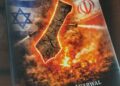

The Americans should have read Col Rajeev Agarwal’s latest book “Between Tehran and Tel Aviv: Gaza’s Story of Unending War” before launching “Operation Epic Fury” in a hurry. The key arguments framing the politico military objectives of the ongoing military operations perhaps would have been shaped differently or the military operation would have been launched with adequate planning that was warranted not only in terms of the wherewithal deployed but also to generate enough favourable world opinion.
Rajeev, an author, researcher but also a veteran from the Indian Military, understands the consequences of a war. He has set the context for the region already marked by instability and contestation wherein the ghastly terror attacks of the 7th October 2023 on Israel by Hamas triggered a cycle of violence. This conflict is not only reshaping the West Asian region but is having disastrous costs for the entire world.
He has rightly argued that the Hamas attack of 7th October was against the run of play, in a backdrop of rare watershed regional developments that were promising lasting peace and reconciliation in the future. Unfortunately, these very stabilising advances like the probable normalization of relations between Saudi Arabia and Israel, Syria’s reintegration into the Arab League and ongoing efforts towards normalisation of Saudi-Iran relationship, triggered the Hamas attack on Israel.
The underlying fear of these developments that were not only sidelining “the Palestinian cause” but also threatened to make the whole strategy of Iran and its proxies irrelevant because the very ideology holding the entire region hostage for nearly five decades would evaporate in case the normalisation processes progressed. Therefore, a big lesson from the war in Gaza is that no long-term peace in the region is plausible without taking into account the core issues of friction as also taking along all the stake holders in the region, big and small, majority or the minority.
The book is extensively researched. It provides a broader geopolitical and historical framework for the current Gaza war, offering readers an interpretive lens through which the volatility of West Asia could be understood with ease. The author brings to fore his operational experience as a military veteran to examine the planning process and execution of Hamas operation that caught the Israeli intelligence, the regional forces and the world powers by surprise.
The assault was huge in scale and yet the Hamas operatives were able to deceive and defeat the most modern and technology driven intelligence organisations of the world delivering a brutal and devastating blow to the Israeli military and people that was not only physical but also psychological. His analysis of the attack itself is detailed and evocative. He draws historical parallels of past attacks, particularly the surprise attack during the Yom Kippur War in 1973.
The author has been fair in the examination of the attack of October 7th, 2023, and the retaliation by Israel to virtually raze Gaza into the ground and has also documented the humanitarian consequences of the Israeli campaign wherein the civilian infrastructure was targeted contributing to loss of lives and displacement.
He has delved into the important facet of narrative warfare surrounding the war, a domain rarely understood and written about. Agarwal has examined the expanding scope of the conflict beyond Gaza wherein Israel leveraged the situation to address broader regional adversaries. He discusses Israeli actions targeting hostile leaderships and military capabilities across the region. An analysis of the involvement by the US has been portrayed as a decisive factor in shaping the trajectory of the war.
The book delves into the domestic political landscape of a leadership grappling with internal pressures and external threats that has influenced the strategic decisions. The book also traces the key developments of US policy such as the relocation of the U.S. embassy to Jerusalem, recognition of territorial claims, and support for settlement expansion that emboldened the Israeli leadership shifting the balance against the Palestinians. Agarwal feels that such actions undermined prospects of long-term peace.
His chapter on “Ceasefire Efforts: Failing to Bridge the Trust Gap” is educative for the policymakers who decide to enter into conflicts or wars. The necessity for clear objectives, options of off ramp and making of intelligent choices by either party has been framed for future reference.
In the concluding sections, the book reflects on the aftermath of the war and the prospects for peace. While Agarwal is cautiously pessimistic, due to obvious challenges of disarmament of militant groups and the withdrawal of Israeli forces, he remains committed to draw out appropriate lessons for the readers, particularly for India that sits in a volatile neighbourhood. His assessment about fragility of ceasefire reinforces the central theme of the book that the Gaza conflict is part of a larger, ongoing struggle that defies easy resolution. The same has come true with the launch of ‘Operation Epic Fury’ and ‘Operation Roaring Lion’ by the US and Israel respectively on February 28, 2026. when the book was possibly being finalised.
“Between Tehran and Tel Aviv: Gaza’s Story of Unending War” is a significant, thought provoking and timely book on a subject that has driven the region into conflict for past nearly eight decades. The relevance of the book, a well-structured and researched product, becomes authentic due to the ability of the author to weave multiple strands of analysis transcending historical, political, military and humanitarian facets of the Gaza war that would always connect Tehran and Tel Aviv in contest even though separated by more than 1800 kilometres. The book is an invaluable resource for anyone seeking to understand the complexities and nuances of West Asia because it is measured, balanced and committed to informed analysis. Agarwal needs to be complimented for a balanced expose of one of the most complex and enduring conflicts in the 21st century.