
The die appears cast. Iran, under sustained long-range strikes targeting its leadership, infrastructure, and economic arteries, is under immense pressure. Whether this is termed a war or an extended coercive campaign, the imbalance of power is stark and therefore the outcome, in purely conventional terms, not surprising.
The broader concern, however, may lie less in West Asia, rather how the conflict is being interpreted within India’s strategic community and political circles as they think about shaping a future-ready military force.
Across Indian media studios and segments of the strategic community, there is visible awe bordering adulation and fascination at the display of high-end military technology. The precision strikes, advanced air defence systems, stealth platforms, and long-range missiles are all at display with repeated rewinds and display at the TV screens suggesting that the entire spectrum of war is being watched and thus can be analysed for the future trajectory of a modern force. What is missing the challenges and the fight of David and Goliath scales and thus the blistering domination of the skies and the scales of the missile launches and expenditure of nearly a billion dollar a day by America only. Developing similar capability in India would be a long-term commitment, more than one factor can slow progress, and factors such as governance structures, geopolitical dynamics, and diplomacy play crucial roles in capability development and the countries in region, from enemies within and wishful thinking that dominant countries like US and China would allow a frictionless rise, again of India is nothing but a pipedream. India may become “Vishwaguru” and is already the “Vishawamitra” but a country that can build a powerful military force only on expensive platforms is possibly a pipe dream as of now.
Therefore, the risk is clear. India is internalizing the most visible lessons of the conflict, rather than the most relevant ones.
Iran vs USA and Israel: Power Asymmetry
The scale of imbalance is not huge but as wide as the Indian Ocean. The United States has the world’s most powerful military spending in excess of $850 billion annually which twice the total economic budget of Iran.
Israel, though smaller, ranks among the top 15 military powers globally, with highly advanced technological capabilities is at par with Iran ranked around 14th–15th in military strength indices. But Iran has faced decades of sanctions and technological isolation.
In terms of economic imbalance, Iran’s GDP is heavily constrained by sanctions, is about $400 billion that is lesser than Israel. The GDP of US exceeds $25 trillion.
Iran, from the very go stood no chance. The only respite was the distance of 1500 kms form the Israeli borders and the two US aircraft carriers, Ford and Lincoln, maintained safe distance.
This is clearly not a contest of equals but a case of overwhelming technological and economic superiority. Iran has to be credited with constrained, not by choice, but adaptive resistance. In such circumstances, the early phases marked by precision strikes and deep targeting will always lean in favour of the stronger but in long term, if strategy is not applied correctly, as was experience in Iraq and in Afghanistan by both Soviet Union and USA, the later phases are worse.
From Blitzkrieg to Slugfest
What appeared initially as a form of long-range “blitzkrieg” is now evolving into a protracted contest of endurance. If Iran does not capitulate internally, having absorbed punishment and adapted the conflict will quickly transform into a war of persistence. Nations get wounded but don’t give up easy. Particulalry civilisations that are 5000 years old.
Iran, having spread out a mosaic defence strategy across the 31 provinces with its forces is well prepared to continue to pain the world, particularly the regional countries in Gulf. Striking willingly at the economic infrastructure, the costs are extremely high for the targeted countries. But the cost of the compellance game of the US is becoming extremely dangerous to world thought the literally choking of the choke point of the Strait of Hormuz, through which roughly 20% of global oil supply transits. Disruptions here have had cascading global economic effects, demonstrating how geography can offset technological inferiority.
Iran’s Strategy: Cannot Fight Tech, Fight Asymmetric
Iran’s leadership appears to have internalized two fundamental realities of avoiding a direct conventional confrontation because they don’t have the capabilities and therefore exploit geographical location and terrain to fight through asymmetry across domains.
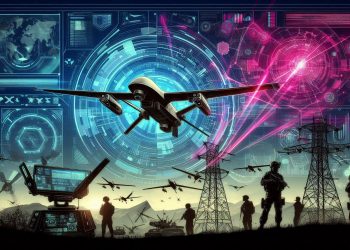
Accordingly, Iran invested in Low-Tech, High-Impact Systems. The widespread deployment of Shahed drones in multiple variants represents a strategic masterstroke. Cheap to produce, difficult to intercept at scale and effective in saturation roles. These systems invert the cost equation wherein a low-cost drone can compel the use of expensive interceptor missiles.
Iran has created a redundancy through a deliberate process of dispersal, layering, and undergrounding. It has built underground missile and logistics facilities, dispersed launch platforms and most importantly developed redundancy in command and control. This has ensured survivability even under sustained air and missile strikes for more than three weeks. Even though all the top leaders are killed the regime continues to function.
The Maritime asymmetry was taken care by investing in Fast Attack Crafts, Naval mines and sub-surface and hybrid maritime threats. It has been destroyed in totality but yet the most powerful navies are unable to transit through the Strait of Hormuz or even come closer to shores even after three weeks. These have also created persistent risk in confined waters like the Strait of Hormuz for the movement of shipping thus ensuring that the nations negotiate even in the times of its isolation.
Perhaps the least discussed but most critical elements are Human Networks and Tactical Adaptation. Iran has invested into a layered force across the domain. To fight along the borders and also to keep the population that is not with the regime under check. No uprising has yet taken place even though the US President Trump has exhorted multiple times for the opposition to come out and seize power.
Iran has a significant number of trained manpower that continue to resist, operate isolated and decentralised and has integrated the irregular and proxy forces. Hamas, Hezbollah continue to fight and Houthis are awaiting orders to intervene along the routes for the Red Sea.
Wars are sustained by people and adaptability and not won by platforms alone.
It is a case of David vs Goliath. Iran, like David, continues to sling at a technologically superior US/Israel combine, the Goliath. Despite degradation of its ballistic missile systems and air defenses, Iran continues to launch strikes, impose economic costs and maintain operational tempo. There may not be technological parity but here surely is strategic resilience.
Platform-Centric Thinking is The Indian Misreading
Past decade, have been instructive for warfighting and warfare with new domains being added every few years. The Armenia Azerbaijan conflict, ongoing war of Russia and Ukraine, Israel Hamas conflict and now the Iran imbroglio have brought a clamour for platform centricity. While development of advanced aircrafts, missile systems, high-end air defence, maritime platforms is absolutely mandatory but the focus is at cost of human resource and low-end technology. The recent selective narratives around operations like Operation Sindoor have also reinforced the belief in the decisiveness of precision strikes and air dominance.
But such conclusions are incomplete without understanding the challenges of Indian security environment. The geography and active borders where technology is most of the time a mute spectator and at best an enabler, decisions will be sought through low end technology which are scalable and cheaper and the human resilience.
India’s primary adversary, Pakistan avoids conventional escalation, relies on asymmetric warfare and proxy actors and has pursued a “thousand cuts” strategy for more than half a century. Technology can be punitive but not decisive. Meanwhile, China represents a technologically advanced, peer competitor that is capable of integrated, multi-domain warfare but is challenged by the geography in the North. The third front is the internal 0.5, that requires high tech for monitoring but low tech and human intervention because unlike Pakistan, China, USA and others, India has to be careful in force application internally. Therefore, India’s challenge is dual-front and hybrid, not singular or purely technological.
India’s Own Experience
If studied dispassionately and without rhetoric and symbolic balancing of credit sharing for success, history offers sobering reminders. In the Kargil conflict, more than 500 Indian officers and soldiers were killed over six weeks of intense fighting. The best of the concentration of artillery was brought to bear on the shallow trenched enemy on the high mountains. The airpower limitations were obvious once the stingers came out and of course the challenges of the identification of friend and foe in close quarter battles and even locating the targets to be neutralised was a challenge. Could mere bombing of the targets given the results of retaking the posts that were occupied by enemies? And when enemy had also not put its airpower in use.
The decisive factor was Infantry assault on entrenched positions. Airpower and artillery can shape the battlefield but cannot substitute boots on the ground. A lesson being learnt by the US now in Iran war and learnt by the Russians and Ukrainians in the ongoing conflict. The best of technology by Israel has been not able to subdue Hamas and Hezbollah. Degrade and destroy yes. Subdue, not yet.
Limited Conflicts and with Weaker Opposition Are Not Templates
Short-duration engagements, such as the reported ~88-hour skirmishes in recent India–Pakistan tensions, are not representative of full-scale war and using them as doctrinal benchmarks maybe misleading. Even in this brief engagement the Pakistani artillery inflicted heavy civilian damage and they were contested by the artillery and range of low-tech weapon systems. The outdated L70s and ZUs were brought to bear against the air and drone attacks. These will be required to be scaled up given the urography and terrain and climate in the Indian context. Though the focus remained on the air power display and missile attacks because the visual delights of the engaged targets but the battlefield was never as “clean” as air-centric narratives suggest and will not be in the future as the modern warfare proponent’s desire.
The rhetoric that comes about on the TV debates and discussions in seminars becomes platform centric and high-end niche technology biases can misguide the politician that needs to take the decision of spreading the limited funds available for national security.
Real Lesson for India: War Is a Spectrum
The deeper lesson for India is that War is a spectrum. When the innovation of human mind for survival meets technology as seen in Ukraine Russia conflict where the slugfest is on over four years and so is the case of Israel Hamas conflict it is evident that conflicts and wars are rage across the spectrum of niche technology to base human endurance. Closer home, by the experience of the Kargil conflict, only those under fire can confess, Iran conflict underscores a fundamental truth: wars are not won at the high end of technology alone but they are sustained and decided across the full spectrum.
This includes high-end precision strikes, very important mid-tier attritional capabilities that are scalable and low-tech which are affordable systems. The discussion for the Indian politician and military planners should definitely focus on human endurance and tactical adaptation.
Compulsion For India: Straddle the Spectrum
Given the geography, terrain, the regional inimical forces and internal enemies, India must straddle the spectrum. Unlike US, China and Europe, India can afford the same. Disruptions in Iran demonstrate how geography can offset technological inferiority.
Therefore, India must maintain a balance in tech focus. India must continue High-End Modernization of Airpower, Missile forces, long range artillery and Network-centric warfare. Invest in Low-Cost, Scalable Systems that can be mass produced such as drones, counter-drone systems and affordable air defence layers. India must Re-centre Human Capital and focus on Infantry modernization, Mountain warfare capability, Small-unit tactical innovation and mech forces. The Indian military must prepare for attrition of supply chain and hence disperse ammunition stockpiles, plan for logistics under degradation and cater for industrial surge capacity.
Experience of Iran must be explored for exploiting terrain for dispersal and protection. Their multilayered command and control systems for operating dispersed when leadership is under attack must be emulated. Explore underground and defensive infrastructure akin to the Chinese and Iranians by tunnelling and hardened positions in the Himalayas and elsewhere.
Just like Iran has used Hormuz as a pain point and leverage, India must develop Strategic Leverage and pressure points vis-à-vis China and Pakistan in terms of maritime chokepoints such as Andamans, economic vulnerabilities and infrastructure nodes.
Conclusion
The Iran conflict is not merely a showcasje of advanced military technology but for India it is a case study in how weaker powers endure, adapt, and impose costs. If India focuses only on the spectacle of precision strikes and advanced platforms, it risks preparing for the opening phase of war, not the conflict as it will actually unfold. The real lesson is far less glamorous. Victory in modern war will belong not just to those with the best technology, but to those who can combine technology with mass, resilience, human skill, and strategic patience. And therefore, India must prepare accordingly and that is across the entire spectrum of warfare.