
Introduction
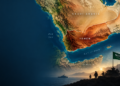
Just around one month ago, Yemen’s Iran-backed insurgent group Ansar Allah, or the Houthis, as they are more commonly called, swept through the southern territories of Yemen, ousting the Presidential Leadership Council (PLC), the internationally recognised Saudi-backed government, from various districts and taking control over strategic port cities and islands on the Red Sea coast. These territories had been controlled by the PLC and its allies till then. However, on October 4, PLC’s leader and Yemen’s President Rashad al-Alimi announced Operation Dawn of Yemen by the Saudi-backed coalition of PLC and various other militias like the Giants Brigade and the National Resistance Forces. The operation, instead of limiting itself to reclaiming the territories lost last month, focuses on an ambitious target of reclaiming all territory controlled by Ansar Allah, including the mountainous Northern region. Since the beginning of the operation, PLC government forces claimed to have neutralised more than 1,800 Ansar Allah fighters in around 2,100 targeted operations. On the other hand, Ansar Allah’s missiles and drones have targeted crucial oil and civilian infrastructure in major Saudi cities. However, Saudi Arabia alone cannot back the PLC to brave the entire operation and is dependent upon various external players.
Reconciliation With the UAE
In southern Yemen, the main anti-Houthi faction, till earlier this year, was the Southern Transitional Council (STC). It was a coalition of militias and socio-political factions backed by the UAE. With its focus on southern Yemen, over a period, STC has developed a long-term goal of separating South Yemen from the rest of the country. Historically, STC has combined diplomacy, armed struggle, and widespread public support to campaign for a separate South Yemen. In January 2026, after disputes with the wider government forces, STC, with the UAE’s backing, STC forces and affiliated militias carried out a swift military campaign against the PLC capturing most of the southern Yemen. However, Saudi-backed government forces soon reclaimed the entire teritorry and forced the STC to dissolve. Currently, STC, as an umbrella organisation remaines dissolved, while many armed groups associated with it, like the Giants Brigade, have joined the PLC. As the conflict in Yemen intensified last month, Riyadh has sought reconciliation with the UAE, and by extension the STC, with the recent meetings between top Saudi and Emirati diplomats. The conciliatory approach between two former allies turned rivals signals a shift in Saudi strategy in the wake of intensified Houthi offensive, pointing to a likelihood of STC gaining political relevance in the future.
Insufficient Response From Saudi Arabia’s Allies
As Saudi Arabia came under attack by Ansar Allah and Iran-backed militias in Iraq, while simultanously being export-blocked in Strait of Hormuz and Bab al-Mandab, the response from its security partner, the USA, and the larger western world, was formal and supportive, but stopped short of any military intervention. Except sharing inteligence, most likely through Israel, the USA was not willing to get militarily involved in the Red Sea. This was due to various reasons. US president Donald Trump is set to face a difficult mid-term election in November where the conflict with Iran that he began in February may backfire. Morevoer, this is a period of lull in the larger US-Iran conflict where both sides are setting conditions for ceasefire and negotiations. Besides, Ansar Allah has also been cautious not to attack US or Israeli targets in these fresh attacks, preventing any real military intervention. The USA would not want to fight on multiple fronts in the region while, according to reports, it runs short on long-range precision munition.
While the lack of intervention from the USA is unexpected for the Saudi leadership, cooperation with Israel comes at an altogether different risk. After the destructive Israeli offensive in Gaza in last three years, any overt cooperation with Israel puts Saudi Arabia’s credibilty among the Arab and the Islamic countries at risk. However, there have been reports of inteligence sharing between Israel and Saudi Arabia, any military assistance from Israel has yet not taken place, and seems unlikely in foreseeable future.
For Saudi Arabia, the newly signed Makkah Defence Agreement, was to act as a deterrent against any potential attacks. However, it has not come to fruition as Saudi Arabia intended to it. Both of its partners, Pakistan and Turkiye, condemned the attack on Saudi Arabia and agreed to deploy military for mutual through statements, but stopped short of any mutual offensive against the Ansar Allah or Iraqi militias that have attacks Saudi Arabia. However, with mounting pressure, there were reports of Pakistan sending around 40,000 troops to defend Saudi Arabia from any attack, which were denied outrightly by Pakistan. Saudi Arabia, since then, has come under attack intense missile and drone attacks from Ansar Allah, who has targeted international airports including international airports in Riyadh, Dammam, and Jazan. Besides damaging the infrastructure, these attacks have caused casualties in Saudi Arabia, many among whom were the pilgrims to holy sites of Mecca and Median, severely denting Saudi Arabia’s image as the custodian of holy sites. Overall, the Makkah Defence Agreement has not brought about the deterrence Saudi Arabia was hoping for since the signatories do not find a single threat common to all three.
Conclusion
Saudi Arabia has built one of the most impressive military forces in the Arab world. However, the country still depends upon security partners like the USA and Pakistan to defend itself from its adversaries. Currently, its security partners are either unwilling, case in point the USA and Turkiye, or unable, for instance Pakistan, to defend it. The only likely way out of this conflict for Saudi Arabia is to diplomatically and strategically engage with the regional countries – reconciliation with the UAE and getting STC’s support on the Red Sea coast, intelligence cooperation with Israel, and facilitating US-Iran negotiations to end the wider conflict in the region.