

Abstract
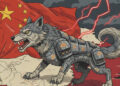
This paper discusses the wolf warrior style diplomacy adopted by China in recent years. This leads to a more assertive, straightforward and seemingly dominating ideology for foreign interaction— its implications for some countries of Southeast Asia, combined strategies, associations and policies. It also delves deeper into concepts like the Belt and Road Initiative (BRI), China’s Wiaxuan and Neixuan approaches to territorial dominance and the possible consequences of such policies. It further focuses on the nuanced dimensions of analysis undertaken for its economic expansion in Asia. The paper finally concludes that such a nationalistic but starkly ambitious approach might hamper the long-term diplomatic gains for China.
Keywords: Wolf Warrior, Neixuan, Assertive, Southeast Asia, Nationalistic Diplomacy