
Introduction
Since the 2003 U.S.-Iraq war and the subsequent fall of Saddam Hussein, the government in Iraq has struggled to maintain complete control over the country. Post-Saddam Hussein Iraq has seen the creation of several armed non-state groups vying for control and influence. Some of the notable ones are the Kurdish Regional Government (KRG), Islamic State of Iraq and the Levant (ISIL), and the Islamic Resistance in Iraq (IRI), an umbrella organisation created in 2023 comprising various Iran-backed Shia militias formed earlier to counter ISIL. Out of these, the KRG controls the northern oil-rich region, while the IRI enjoys widespread political and military influence in Iraq. IRI’s interference does not just prevent the Iraqi government from exercising complete control over domestic issues but also influences its foreign policy. These Iranian proxies have been actively involved in the recent conflict between the U.S. and Iran by attacking Iraq’s neighbours in the Gulf with Shahed-style drones and rockets. This has put the Iraqi government in a complicated situation where balancing the USA and neighbouring Iran is becoming more difficult with time. Moreover, this also puts Iraq in the crosshairs of both warring sides, which is evident from the airstrikes and drone attacks on military bases and Kurdish leaders.
Successful Model of Proxy Warfare and Regional Instability
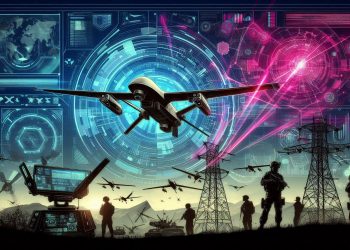
After the fall of ISIL, most Iran-backed militias rallied under the banner of the Popular Mobilisation Front (PMF), a state-recognised paramilitary force. The PMF militias have since conducted various attacks both inside and outside Iraq. In 2021, Kataib Hezbollah (KH), a militia under the PMF, carried out a drone attack against the US forces stationed in Al-Asad Air Base in Iraq. Through many of its front organisations, such as Qasem al-Jabbarin (QAJ), KH has carried out several attacks inside Iraq, including drone attacks and roadside bombings. From the long-distance drone attack on Riyadh to the Erbil Airport drone attack in 2021, KH and its front militias have shown drone capabilities on the line of the Houthis in Yemen, who use diverse drones, including Shahed-inspired Sammad series with a range of 500-1800 kilometres. Additionally, in 2024, another Iran-backed militia, Saraya Awliya al-Dam (SAD), demonstrated the capability to launch a Shahed-style drone from a boat, practically creating an improvised drone carrier.
Pledging to fight alongside the Iranian regime in the recent conflict, these militias have attacked the US bases, Israel, and the US-allied countries in the Persian Gulf, such as the UAE, thereby practically extending the Iranian ability to attack. One of the most prominent attacks on neighbouring countries was the audacious drone attack on the UAE’s Barakah Nuclear Power Plant. The incident was widely criticised as a serious safety concern by the International Atomic Energy Agency (IAEA), as the drones originating from Iraqi territory narrowly missed the main facility.
These militias not only extend Iranian military influence in West Asia but also create a threat network working alongside several other non-state actors across national boundaries. They demonstrate improvised weapon systems using over-the-counter parts, effectively reducing the production cost. From Houthis in Yemen and Hezbollah in Lebanon to Islamic Resistance in Iraq, the use of a similar drone swarm by all regional militias backed by Iran suggests a coordinated knowledge-sharing effort among these groups. When analysed as a singular Iran-backed bloc, this network of militias, which is spread across the region and is armed with Shahed-style low-cost swarming one-way drones, presents a successful model of proxy warfare for any conventionally inferior country.
Implications for Iraq’s Political Sovereignty
The militias in Iraq did not derive their power solely from Iranian backing. After the fall of ISIL in 2014, successive Iraqi governments have decided to accommodate these groups into the power structure in an attempt to pacify them. Although the strategy found limited success with groups such as the Badr Organisation, which almost replaced their militancy with political activities. However, official recognition of PMF as a paramilitary force provided legitimacy and funding to militia groups like the KH.
As a result, these groups do not act on the fringes of power. Rather, they have been co-opted into the Iraqi army and the ruling coalition. The Iraqi government has often failed to bring these militias under its control. PMF contributes more than two lakh fighters from all its member militias to the Iraqi army, naturally enjoying heavy influence over military decisions. These fighters, most of them being Shia, swear allegiance to Iran’s Supreme Leader. Much like Hezbollah in Lebanon, these lesser-known militias in Iraq also extend Iran’s political and military influence over Iraq’s military and foreign policy.
Conclusion
The formation of various warring factions after the loss of a powerful centre is not a novel idea. Time and again, history has witnessed this phenomenon. However, the ingenuity in Iran’s proxy network across the region lies in a deep ideological connection and control over the government of the host country. Iran-backed groups like Hezbollah begin as non-state actors, gain political and military power, and eventually become a part of the government. Iraq’s militia groups, especially those under PMF, have also paved a similar path for themselves. However, as Iraq continues to be caught in the crossfire of the U.S.-Iran conflict, the Iraqi government has attempted to reduce their influence. The future of Iraq’s military and foreign policy will depend on the extent of success these reforms achieve.