
Terrorism
Terrorism is the systematic use of violence to create a general climate of fear in a population and thereby to bring about a particular political objective. The regions with long term terrorist activities have been Jammu and Kashmir, east-central and south-central India and the Seven Sister States. In August 2008, National Security Advisor, Mr M K Narayanan has said that there are as many as 800 terrorist cells operating in the country. As of 2013, 205 of the country’s 608 districts were affected by terrorist activities. Terror attacks caused 231 civilian deaths in 2012 in India, compared to 11,098 terror-caused deaths worldwide. Pulwama attack in Feb 2019 alone saw casualties of 40 CRPF personnel.
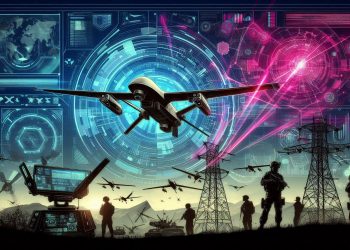
The technological developments bring about ‘Revolution in Military Affairs’(RMA) in India and around the globe. Long-range precision fires, information warfare, system of systems, network centric warfare and cooperative engagement capability are key potential manifestations of the new RMA. Simultaneously, there are ‘Revolution in Terrorist Affairs’. The addition of information warfare tactics to the terrorist’s arsenal and technological advancements have made the battlefield transparent for the terrorists. The conventional territorial boundaries have been blurred with the use of information. The paradigm shift in the revolution in terrorist affairs has transformed from conventional terrorism to techno terrorism and cyber terrorism in India and across the globe equally.
Conventional Terrorism
Conventional terrorism, an act committed by non-state actors, aims to destroy or threaten a symbolic target of violence in the physical world. It involves the systematic use of violence to create a general climate of fear in a population and thereby to bring about a particular political, religious, ideological or social objective. Pulwama attack in February 2019 is the recent example of conventional terrorism.
Techno Terrorism
In this form of terrorism, classical weapons are used by terrorists to destroy infrastructure targets and cause a disruption in cyber space. The technology is used to enhance the effectiveness of the weapon system used by terrorists in destruction of targets in the physical domain. This type of terrorism includes bombing infrastructure targets (power, telecommunications, etc.) to create a disruption in cyber space. Techno terrorists do not utilize physical destruction, such as bombing a power station, to convey a message. Rather, they rely on the cyber space disruption of the same directly or indirectly to garner publicity for his cause.
Cyber terrorism
Cyber terrorism, on the other hand, is terrorism that operates exclusively in cyber space. In cyber terrorism, new weapons (malicious software, electromagnetic and microwave weapons) are used by terrorists to destroy or alter data or information infrastructure in cyber space to cause a disruption in the physical world. The critical element in cyber terrorism, and information warfare in general, is knowledge. While the tools of the cyber terrorist (computers, modems, phone connections) are nearly universally available, the knowledge of computer systems and their weaknesses (while becoming increasingly common) is not as easily obtained. Some of the incidents of cyber terrorism date back to the year 2000. During the bombing campaign in Yugoslavia, NATO found itself under attack by a flood of 2000 virus-laden e-mails a day. In the year 2018, UIDAI Adhaar software was hacked. In the year 2019, India based healthcare websites became a victim of cyber attack. The hacker stole 68 lakh records of patients as well as doctors. On 22 December 2019, Twitter warns Indian users about data breach because of a malicious code was inserted into its app. This could have allowed a bad actor to see account information and also control the account of the users (send tweets or direct messages).
Use of Information to Enhance Terrorism
A 25 minute training video on how to make explosive belt to blow yourself up and kill as many people as possible was first posted on a jihadist message board, presented the necessary explosives, shrapnel and vest for a suicide bomber demonstrating how to assemble the material and wear a belt. The video also showed a test of the explosive belt with a simulated detonation aboard a crowded bus. Such websites and training videos are often posted and removed quickly to avoid detection. This opens perhaps the widest front in the war on terror ie cyber space.
In essence, the Internet is the perfect communication tool for terrorists, and it mirrors the framework of their operations: decentralized, anonymous, and offering fast communication to a potentially large audience. The Internet is used to plot and claim responsibility for terrorist acts, to address sympathizers and enemies alike, and to raise money and attract new recruits.
With the above, it emerges that the terrorists in the information age need not come through conventional borders. Through the use of new technology, terrorist groups may have fewer members, yet still have a global reach. He will not be required to cross the border fencing or face the troops at Line of Control, he can silently slip into the information infrastructure of the country and can operate through the malwares and spurious programs to achieve its objectives at the time and place of his own choosing, and that too, without any advance information. If the goal of the cyber terrorist is to create terror, the best course of action may be to attack a computer system that will place lives in immediate jeopardy, such as aircraft control systems.
Characteristics of Information Age Terrorism
Terrorists, in the past, operated in what J. Bowyer Bell described as a ‘dragon world’, where they were forced to live in fear of constant government surveillance. New technology has affected the ‘balance of power’ between terrorists and government authorities. Terrorists use increasing computer power and publicly available encryption technology to secure their member’s communications. In the information age, some of the structures that constitute the ‘supporting framework’ of society are
likely to be the high technology networks that allow individuals to communicate, access their money, and be employed. Thus, they are ideal targets for symbolic violence.
A conventional terrorist aims at destruction, whereas information age terrorism will aim at mass disruption. Second, the terrorist threat is likely to become more ‘demassified’. with smaller numbers of individuals able to create disruption via virtual worldwide organizations. Third, the pattern of state sponsorship is likely to change. While old state sponsors will continue to exist, terrorists may turn to poorer states or choose to fund themselves via information warfare crime. Fourth, information warfare techniques may afford terrorists the ability to reach their target more effectively. Fifth, the nature of offense and defense in cyber space does not mirror that of ‘conventional’ offense and defense in the physical world. The victims in cyber space will never ‘see’ their attacker, nor are they likely to have any relationship with their attackers in the ‘real’ world. Rather, the interaction will occur exclusively in the anonymous realm of cyber space. And finally, as the world shifts into the information age, this disparity between terrorists and the state decreases, with individuals and sub-state groups now able to control information manipulation tools that were once restricted to the state.
Ways to Counter Cyber Terrorism
The most effective defense is to isolate a computer or network completely from the rest of cyber space. If there is no access into a computer system because it has been removed from all networks, defending it will be easier. The second form of defense is similar to a point defense with access to a computer system challenged by an authentication and identification procedure. In this case, the computer asks for and verifies the password provided by the user. While ‘static’ passwords that do not change are vulnerable to attack by random guessing, technology, such as the ‘smart card’, exists to provide a constantly changing set of passwords that are nearly impossible to crack. Increasing the transmission paths available to data is akin to a defense in depth. As the data paths increase, the ability of an enemy to attack all of them decreases. The use of encryption to ensure the confidentiality and integrity of data consists of electronically scrambling, and thus armour plating the data that is to be sent through cyber space. Even if the data is intercepted and copied, its contents remain unknown to the enemy until they can decrypt it, which may take years.
In active attacks, if a terrorist website hosted in another country is not taken down by the government in that country, it needs to be hacked and brought down. There is a need to use active and passive attacks to disrupt terrorist’s electronic networks. Active attacks include using computer viruses to infect terrorist’s computers. Counterfeit e-mails can also be used to confuse or subvert communications. Doing so may arouse suspicion and force terrorists to use less efficient modes of communication. Passive attacks aim to monitor the terrorist’s information network, monitor e-mails, electronic banking transactions, watch traffic patterns and other data exchanges but not overtly disrupt it. In passive attacks data is collected selectively. This includes getting address books, or collecting the ‘cookies’ written to the computer’s hard drive when the terrorist visits certain websites. There are also ways to monitor keystrokes, even if a terrorist uses encryption. The goal is not only to acquire information in the terrorist’s’ possession, but also to force them to use other forms of communication –perhaps slower and less effective, or perhaps someone that may be easier to intercept or that may provide more information upon intercept.
Challenges of Countering Terrorism in Information Age
A dilemma of combating terrorism in a democratic society is finding the right balance between civil liberties and civil security. Information age terrorists may or may not be state sponsored, but are hidden within the civilized population. Traditional weapon system like tanks, aircrafts and cruise missiles are ineffective against the information age terrorist. Operating from home, these terrorists can function in their cells like structure using encrypted mail as means of communication to their organisation’s network and thereby reducing their chances of exposure. Military, civilian and commercial databases, computer systems, information infrastructures are potential targets of information terrorists. Unauthorised access to critical information infrastructure by information terrorists can destroy, degrade, disrupt, deny or delay vital information that a military or government relies upon and thus become a threat in the peace time as well as in time of war.
Conclusion
The physical and virtual world is converging as we venture further into technical dependence. By every passing day, we are becoming more dependent on the convergence of these two worlds. Military response to the information age terrorism has to be anonymous fully networked and swift. Rapid crisis management and response time are the keys to counter information age terrorism. Offensive information warfare techniques must be utilized to respond to information age terrorism. Thus there is a need to formulate Integrated Counter Information Terrorism Group on the lines of Computer Emergency Response Team. Finally, India needs a global counter terrorism strategy for terrorism in the information age.
References
https://www.hsdl.org › view https://fas.org/irp/threat/cyber/docs/npgs/ch2.htm
https://ccdcoe.org/uploads/2012/01/3_4_Fahrenkrug_AnIntegratedDefensiveStrateg y.pdf
https://www.pbs.org/wgbh/pages/frontline/shows/front/special/tech.html https://www.pbs.org/wgbh/pages/frontline/shows/front/special/techsidebar.html