
Rapporteur: Dr Arushi Anthal
Introduction
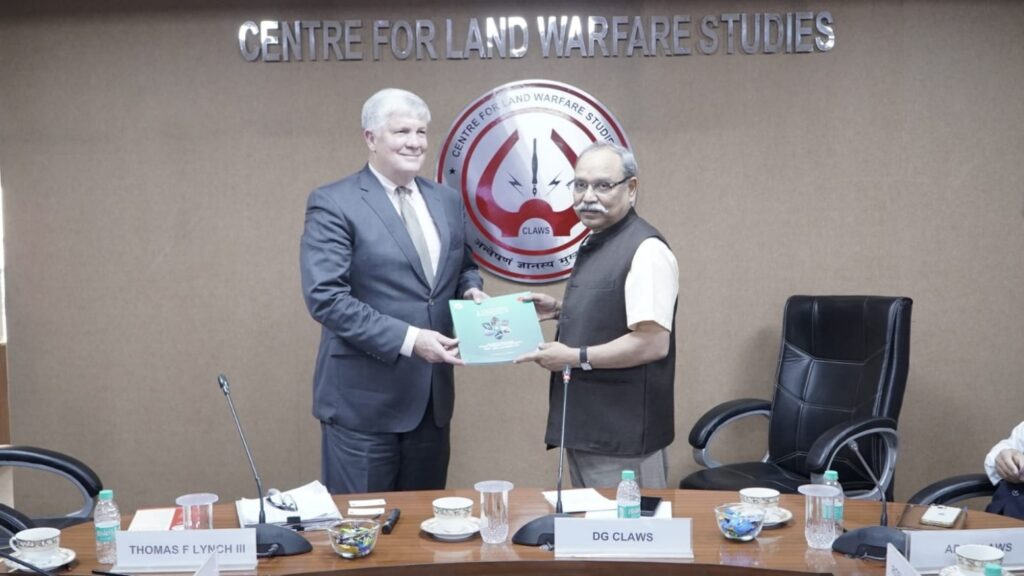
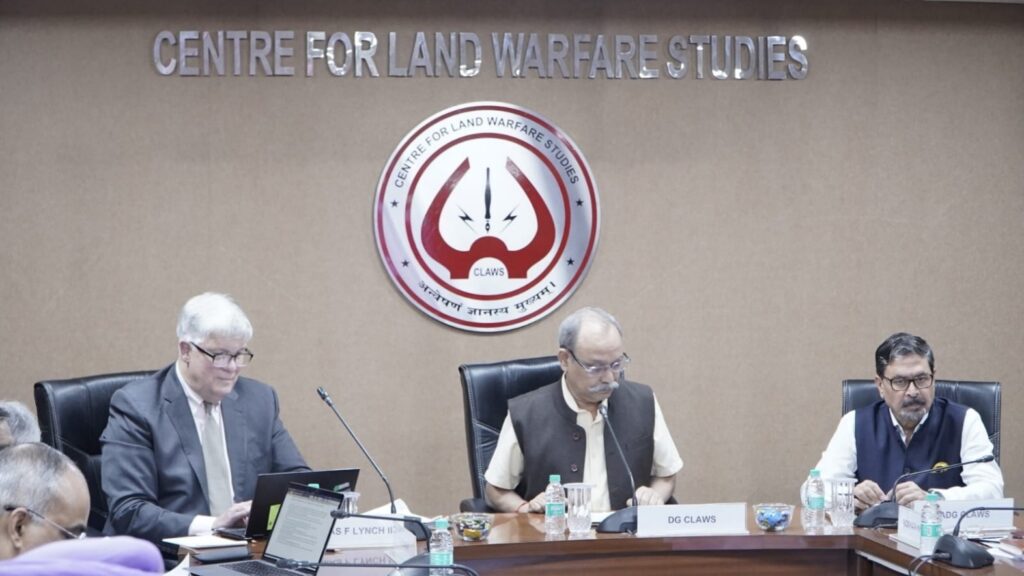
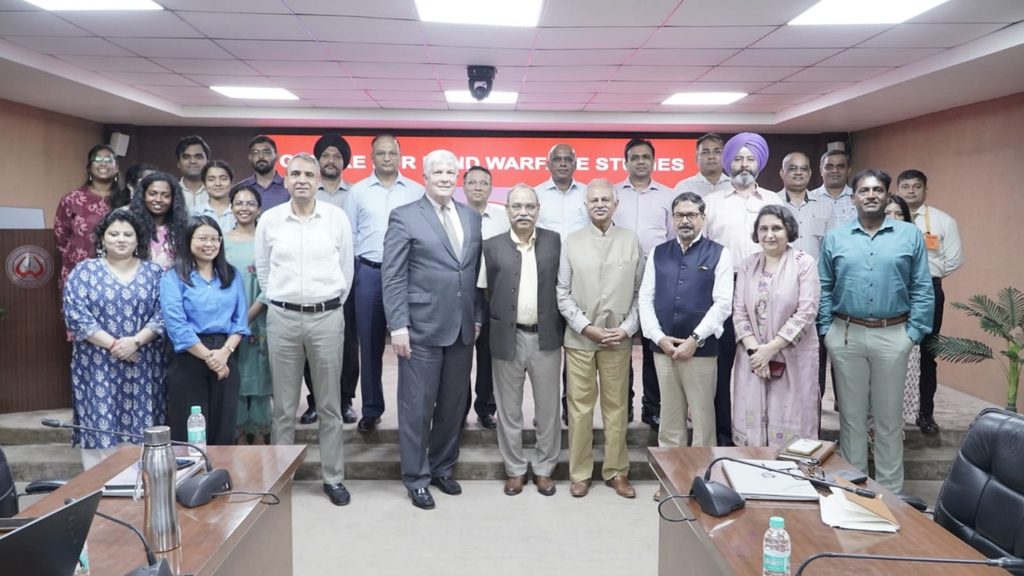
The Centre for Land Warfare Studies convened a Round Table Discussion on “Rethinking the Quad: Relevance, Challenges and Way Ahead” on 9 September 2026. Lieutenant General Dushyant Singh, PVSM, AVSM (Retd), Director General, CLAWS, delivered the welcome remarks and chaired the proceedings. The distinguished guest was Dr. Thomas F. Lynch III, Distinguished Research Fellow, Institute for National Strategic Studies, National Defense University. The panel included Vice Admiral AB Singh, PVSM, AVSM, VSM (Retd), former Commander-in-Chief of the Western and Eastern Naval Commands, and Lieutenant General PS Rajeshwar, PVSM, AVSM, VSM (Retd), former Commander-in-Chief, Andaman and Nicobar Command, and former Director General, CLAWS, who joined online.
Discussion
Dr. Lynch, speaking in a personal capacity, observed Quad engagement operating at two levels. Summit-level momentum had slowed, with leaders’ meetings deferred, while ministerial, operational and bilateral activity had grown steadily. He cited four ministerial engagements under the second Trump administration, including Tokyo (July 2025) and New Delhi (May 2026), the latter significant for India.
Vice Admiral AB Singh placed the Quad within India’s wider bilateral relationships. Ties with Japan and Australia remained stable, while the US relationship, built on two decades of investment, drew particular attention amid evolving Indian views. He stressed India’s primary interest lies in the “Indo” component, whereas other members lean towards the Pacific. Priorities included undersea domain awareness and cables, a delivery-oriented critical and emerging technology working group, and cyber and space cooperation.
Lieutenant General Rajeshwar situated the Quad against three “long shadows”: US tariffs, the Ukraine war and the Iran conflict. He described continued activity with uneven momentum and expansion into climate, health, infrastructure, cyber, education and supply chains. Opportunities included maritime domain awareness, the Information Fusion Centre for the Indian Ocean Region, countering scam and trafficking networks, energy security, and critical technologies as alternative connectivity models.
Key Takeaways
- The Quad is usefully understood at two levels: a slower pace of political and summit-level engagement alongside steady, incremental progress at the ministerial, operational, and bilateral levels.
- A body of normative and operational initiatives has advanced, including the move from maritime domain awareness to active surveillance cooperation, the undersea cables initiative, critical minerals, digital and communication standards, and Indo-Pacific energy security, reinforced by recent bilateral security agreements such as India-Japan and India-Australia.
- From the Indian vantage point, the Quad sits within a broader set of stable bilateral relationships, and there is a case for a more balanced agenda across its Indo and Pacific components, including bringing Indonesia into key initiatives.
- The consensus view was that the Quad remains durable but deliberately limited, and that the priority should be converting existing commitments into delivery through expert and joint working mechanisms.