Monday, June 22, 2026
Advertise with us
Support us
Write for us
No Result
View All Result
claws
  • Home
  • About Us
    • Director General
    • Additional Director General
    • Jottings by Director General Emiritus
    • CLAWS Membership
    • Faculty
  • Publication
    • Web Articles
    • Issue Briefs
    • Manekshaw Papers
    • Newsletter
    • Essay
    • CLAWS Journal
    • Scholar Warrior
    • Books
    • Intern Articles
    • External Publications
  • Research Areas
    • Global & Regional Security
      • China
      • Pakistan
      • Afghanistan
      • South Asia
      • Indo Pacific
      • US, EU & Russia
      • MENA
      • CAR
    • National Security
      • National Security Strategy
      • Nuclear Deterrence
      • Non Traditional Threats
      • Intelligence
      • Terrorism & Internal Security
      • Grey Z & IW
      • Security Laws
    • Military Studies
      • Military Doctrine
      • Military Strategy
      • Peace Keeping Ops
      • Military History
      • Military Logistics
      • Out of Area Contingency Ops
      • Leadership
    • Military Technology & Defence Acquisition
      • Military Technology
      • Defence Acqn
      • Budgets & Finance
      • Defence Infrastructure
      • Human Resources
    • Multi Domain Studies
      • Jointmanship & Integration
      • Space
      • Cyber
      • Spl Operations
      • Energy & Environment
      • Defence Eco System
      • Defence Diplomacy
      • HADR
  • Web Archive
  • Events
    • Seminars
    • Webinars/RTD
  • PROMEX
  • University Cell
    • About The Initiative
    • Admission: Eligibility and Procedure
    • Guides | Supervisors in the PhD Programme:
    • Important Information
    • Administration
    • Application Fee: Batch – 10 Onwards
  • Careers
  • Contact
  • Home
  • About Us
    • Director General
    • Additional Director General
    • Jottings by Director General Emiritus
    • CLAWS Membership
    • Faculty
  • Publication
    • Web Articles
    • Issue Briefs
    • Manekshaw Papers
    • Newsletter
    • Essay
    • CLAWS Journal
    • Scholar Warrior
    • Books
    • Intern Articles
    • External Publications
  • Research Areas
    • Global & Regional Security
      • China
      • Pakistan
      • Afghanistan
      • South Asia
      • Indo Pacific
      • US, EU & Russia
      • MENA
      • CAR
    • National Security
      • National Security Strategy
      • Nuclear Deterrence
      • Non Traditional Threats
      • Intelligence
      • Terrorism & Internal Security
      • Grey Z & IW
      • Security Laws
    • Military Studies
      • Military Doctrine
      • Military Strategy
      • Peace Keeping Ops
      • Military History
      • Military Logistics
      • Out of Area Contingency Ops
      • Leadership
    • Military Technology & Defence Acquisition
      • Military Technology
      • Defence Acqn
      • Budgets & Finance
      • Defence Infrastructure
      • Human Resources
    • Multi Domain Studies
      • Jointmanship & Integration
      • Space
      • Cyber
      • Spl Operations
      • Energy & Environment
      • Defence Eco System
      • Defence Diplomacy
      • HADR
  • Web Archive
  • Events
    • Seminars
    • Webinars/RTD
  • PROMEX
  • University Cell
    • About The Initiative
    • Admission: Eligibility and Procedure
    • Guides | Supervisors in the PhD Programme:
    • Important Information
    • Administration
    • Application Fee: Batch – 10 Onwards
  • Careers
  • Contact
No Result
View All Result
CLAWS
No Result
View All Result
Home Articles

China’s Floating Platform at Scarborough Shoal: A Pattern of Pressure

Arushi AnthalbyArushi Anthal
June 22, 2026
in Articles
A A
0
Post Views: 5

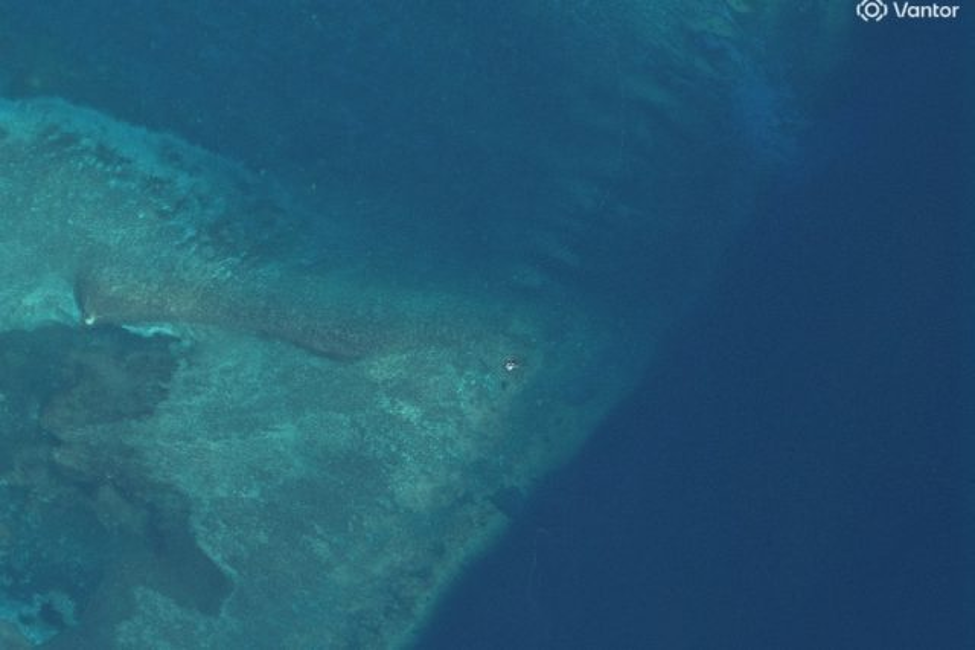
A satellite image shows a possible raft at the opening to Scarborough Shoal, in the South China Sea, May 27, 2026.

The Armed Forces of the Philippines (AFP) Chief, General Romeo Brawner Jr., confirmed the presence of a “six-by-six structure manned by at least six unidentified personnel” inside the lagoon of Bajo de Masinloc in the West Philippine Sea around May 2026. He further stated that “the protection of Philippine sovereignty, sovereign rights, and jurisdiction remains a paramount consideration” and that China seemed to be using a movable platform for data gathering for maritime research. This was followed by a diplomatic protest and a démarche issued by the Department of Foreign Affairs of the Philippines. This incident comes just weeks before the 10th anniversary of the landmark Arbitral Award, issued on 12th July 2016. The Award directed China to “respect the rights and freedoms of the Philippines” and stated that the “root of the disputes at issue in this arbitration lies not in any intention on the part of China or the Philippines to infringe on the legal rights of the other, but rather in fundamentally different understandings of their respective rights under the Convention (UNCLOS) in the waters of the South China Sea.” It was on June 17, 2026, that the National Task Force for the West Philippine Sea confirmed the removal of the Chinese floating platform from the Bajo de Masinloc (Scarborough Shoal). On the other hand, China has iterated its “indisputable sovereignty” over the shoal, which it refers to as the Huangyan Island. The Chinese Foreign Ministry spokesperson on June 17 stated that the floating structure at the Scarborough Shoal was a temporary scientific research facility that was part of “comprehensive research” in the South China Sea established by its South China Sea Institute of Oceanology of the Chinese Academy of Sciences.

For now, this incident might seem like a tactical win for the Philippines, but this highlights the significant pressures impacting and reshaping Southeast Asian security dynamics. This incident is not an isolated one, but rather a part of a broader pattern of incremental assertiveness by China. In fact, in 2026 alone, several incidents of similar kinds have been noted. For instance, the satellite image provider Vantor revealed China deploying a patrol vessel just outside the entrance of the Scarborough Shoal on April 10, 2026, and this was confirmed by Jay Tearriela, Philippine Coast Guard spokesperson, who stated that the “Chinese government had installed a 352-m (1,150-ft) floating barrier at the entrance on April 10 and April 11” and that “Six Chinese maritime militia vessels were observed within the shoal, while three others were spotted outside, seemingly obstructing the entrance to Bajo de Masinloc.” Another instance was the increased tensions in Sandy Cay, an unoccupied sandbar in the Spratly Islands. China accused the Philippines of the personnel landing on the disputed reef and termed it “illegal.” Similarly, the March 7, 2026 encounter between the PLA’s Type 056A-class corvette pointing its Type 347 fire control radar at the Philippine Navy’s BRP Miguel Malvar near Sabina Shoal was termed an “escalatory act” by Manila.

The Broader Pattern: 2026 Incidents and Their Implications

These repeated actions underscore that the recent floating platform incident is not a one-off event; rather it is a continued pattern of incremental moves by the Chinese to gauge the Philippines’ responses and gradually change the situation on the water. Rather than using large-scale, irreversible action, China’s approach relies on small steps like temporary structures, vessel deployment, which primarily engages in research, and physical obstruction. All these actions have the ability to alter the operational environment of the South China Sea despite staying below the threshold of open conflict. This piecemeal method allows China to gradually expand its presence and simultaneously restrict the Philippines’ access to fishing grounds and patrol areas. What is more significant here is to understand that each move by China is only reversible if challenged firmly but China’s claims of merely conducting research and routine activities dilute the pertinence of such instances. More importantly, the repeated nature of such ‘below the threshold’ activities significantly wears down the monitoring capacity of the Philippines and normalises an assertive China despite the 2016 Arbitral award.

Instances such as these position the Philippines in a persistent dilemma wherein tactical successes through sustained patrols and diplomacy highlight the relevance of persistent monitoring. However, the Philippine Navy and the Coast Guard have to bear substantial operational costs because of the frequency of these encounters. Repeated deployments, aerial surveillance and diplomatic protests divert attention from other security needs. As already emphasised above, these incidents coincide with the 10th anniversary of the 2016 Arbitral Award, carrying strong symbolic implications as it accentuates that legal victories do not translate to a win on the seas.

While the Philippines is at the forefront of this situation, this pattern carries wider consequences for Southeast Asia as a whole. Other nations also face similar challenges from China, weakening their overall confidence and resolve in the UNCLOS-based rules. Despite continued responses from the Philippines, other nations also understand the limits of unilateral pushback when it comes to maritime security. Therefore, the challenge is not to handle escalation but rather to maintain sustained deterrence through presence in the South China Sea. It is affirmative that the strategic partnerships with the US, Japan, Australia, India, etc. can provide valuable support through capacity building and joint exercises, but this cannot fully neutralise the daily pressures of grey zone tactics. Therefore, the need of the hour is to combine effective monitoring, diplomatic coordination within ASEAN and international attention to these incidents, as it is this that will translate to long-term successes.

Conclusion

In a nutshell, these 2026 incidents in SCS highlight that it is these small cumulative actions that reshape maritime realities and not all-out confrontations. What is needed is not just reacting to each proactive action by China, but rather working on the underlying strategy that drives it. The real test is not tactical victory but preserving sovereignty, stability, and long-term peace in the SCS, and this will depend on whether Southeast Asian nations can counter this pattern of incremental pressure collectively before it reshapes the region’s strategic landscape.


Tags: ChinaMilitary Strategy
Previous Post

US-Iran Truce – Easy To Conceive, Difficult To Maintain

Arushi Anthal

Arushi Anthal

Leave a Reply Cancel reply

Your email address will not be published. Required fields are marked *

Support Us Donate Now

Web Updates

OBITUARY Lt Gen Vijay Oberoi, PVSM, AVSM, SM, VSM (Retd) 01 Oct 1941 – 14 JUN 2026

CLAWS MAHE PHD PGME | B – 9 Shortlisted Candidates

Field Marshal Manekshaw Essay Competiton 2026

🚀 Applications Open | CLAWS Research Internship Programme – Summer Session | 10th April to 11th May 2026

In the Budget 2026-27 | Machine Sourced

Promotion Exam Correspondence Pre Course (PROMEX)

  • Trending
  • Comments
  • Latest
Russia-Ukraine War: Lessons from an Electronic Warfare (EW) Perspective

Russia-Ukraine War: Lessons from an Electronic Warfare (EW) Perspective

May 31, 2025
Results | Field Marshal Manekshaw Essay Competition – 2024

Field Marshal Manekshaw Essay Competiton 2025

May 23, 2025
Op Sindoor 2.0: Why & How India Must Prepare for the Next Round?

Op Sindoor 2.0: Why & How India Must Prepare for the Next Round?

May 21, 2025
Field Marshal Manekshaw Essay Competiton 2026

Field Marshal Manekshaw Essay Competiton 2026

April 23, 2026
From Sword Clashes to Drone Strikes: A History of Changing Battlefields

From Sword Clashes to Drone Strikes: A History of Changing Battlefields

15
The Arakan Army and Its Impact on India: Rising Tensions Along the Eastern Frontier 

The Arakan Army and Its Impact on India: Rising Tensions Along the Eastern Frontier 

5

Thwarting  Pakistan’s Nefarious Designs in Bangladesh

5
India’s Pursuit of Self-Sufficiency in Rare Earth and Critical Minerals: South Caucasus as an Option

India’s Pursuit of Self-Sufficiency in Rare Earth and Critical Minerals: South Caucasus as an Option

3
China’s Floating Platform at Scarborough Shoal: A Pattern of Pressure

China’s Floating Platform at Scarborough Shoal: A Pattern of Pressure

June 22, 2026
US-Iran Truce – Easy To Conceive, Difficult To Maintain

US-Iran Truce – Easy To Conceive, Difficult To Maintain

June 22, 2026
Parallel Wars and Proxy Shields: How Pakistan’s Army Weaponises Terror and Aid

Can Pakistan Define Its Primary Threat Anymore? Changing Threat Perception and Strategic Priorities in Pakistan’s Evolving Security

June 19, 2026

Dollars, Duplicity, and Diplomacy: The Paradox of US-Pakistan Transactional Security Partnership (1947-2026)

June 19, 2026

Popular Stories

  • Russia-Ukraine War: Lessons from an Electronic Warfare (EW) Perspective

    Russia-Ukraine War: Lessons from an Electronic Warfare (EW) Perspective

    0 shares
    Share 0 Tweet 0
  • Field Marshal Manekshaw Essay Competiton 2025

    0 shares
    Share 0 Tweet 0
  • Op Sindoor 2.0: Why & How India Must Prepare for the Next Round?

    0 shares
    Share 0 Tweet 0
  • Field Marshal Manekshaw Essay Competiton 2026

    0 shares
    Share 0 Tweet 0
  • From Sword Clashes to Drone Strikes: A History of Changing Battlefields

    0 shares
    Share 0 Tweet 0

About us

CLAWS

The Centre for Land Warfare Studies (CLAWS), New Delhi, India is an independent think tank on strategic studies and land warfare. The mandate of CLAWS covers national security issues, conventional military operations and sub-conventional warfare.

Browse by Category

  • Articles
  • Autumn 2019
  • Autumn 2020
  • Books
  • Chanakya Defence Dialogue
  • CLAWS Focus
  • CLAWS Journal
  • Essay
  • Events
  • External Publications
  • FMMEC
  • Intern Articles
  • Issue Briefs
  • Jottings by Director General Emiritus
  • Manekshaw Papers
  • Newsletter
  • Round Tables
  • Scholar Warrior
  • Seminars
  • Uncategorized
  • Web Updates
  • Winter 2019
  • YouTube Podcast

Recent News

China’s Floating Platform at Scarborough Shoal: A Pattern of Pressure

China’s Floating Platform at Scarborough Shoal: A Pattern of Pressure

June 22, 2026
US-Iran Truce – Easy To Conceive, Difficult To Maintain

US-Iran Truce – Easy To Conceive, Difficult To Maintain

June 22, 2026
  • Site Map
  • Tenders
  • Advertise With Us
  • Terms of use
  • Privacy Policy
  • Other Think Tanks

© 2008-2026 Centre for Land Warfare Studies (CLAWS).

No Result
View All Result
  • Home
  • About Us
    • Director General
    • Additional Director General
    • Jottings by Director General Emiritus
    • CLAWS Membership
    • Faculty
  • Publication
    • Web Articles
    • Issue Briefs
    • Manekshaw Papers
    • Newsletter
    • Essay
    • CLAWS Journal
    • Scholar Warrior
    • Books
    • Intern Articles
    • External Publications
  • Research Areas
    • Global & Regional Security
      • China
      • Pakistan
      • Afghanistan
      • South Asia
      • Indo Pacific
      • US, EU & Russia
      • MENA
      • CAR
    • National Security
      • National Security Strategy
      • Nuclear Deterrence
      • Non Traditional Threats
      • Intelligence
      • Terrorism & Internal Security
      • Grey Z & IW
      • Security Laws
    • Military Studies
      • Military Doctrine
      • Military Strategy
      • Peace Keeping Ops
      • Military History
      • Military Logistics
      • Out of Area Contingency Ops
      • Leadership
    • Military Technology & Defence Acquisition
      • Military Technology
      • Defence Acqn
      • Budgets & Finance
      • Defence Infrastructure
      • Human Resources
    • Multi Domain Studies
      • Jointmanship & Integration
      • Space
      • Cyber
      • Spl Operations
      • Energy & Environment
      • Defence Eco System
      • Defence Diplomacy
      • HADR
  • Web Archive
  • Events
    • Seminars
    • Webinars/RTD
  • PROMEX
  • University Cell
    • About The Initiative
    • Admission: Eligibility and Procedure
    • Guides | Supervisors in the PhD Programme:
    • Important Information
    • Administration
    • Application Fee: Batch – 10 Onwards
  • Careers
  • Contact

© 2008-2026 Centre for Land Warfare Studies (CLAWS).