
When Prime minister Narendra made his first official trip to Israel in February 25-26, 2026 in his third term (the earlier one being in 2017), it was potentially significant in view of the fast changing global and regional uncertainties and turbulence and with India in balancing its relationship in West Asia. The bilateral relationship between the two countries is multifaceted ranging from trade, defense, technology, agriculture, to counter terrorism, security and increased cooperation in educational and cultural sectors.
Historical Context
Just two years after Israel’s David Ben-Gurion proclaimed independence, India had formally recognized the new state in 1950. However, it took some three decades to cement the relationship further with India according full diplomatic relations in 1992. Since then, the bilateral relationship has witnessed massive upward trajectory particularly since Narendra Modi became the Prime minister in 2014 and with personal ties and chemistry between PM Modi and PM Netanyahu (who visited India in 2018) flourishing further in elevating India-Israel bilateral relationship substantially.
Trade and Investment
Bilateral trade between India and Israel has increased manifold from USD $200 million in 1992 to USD$ 10.1 billion (excluding defense) during 2022-2023. India is Israel’s third-largest trade partner in Asia and seventh-largest globally. Israel is a leading partner in water technology, agriculture, and high-tech sectors which India can tap into. From India, Israel can make use of India’s innovation and business technology, fintech, AI, Quantum computing, pharmaceuticals. Israeli companies such as Check Point, IDE Technologies, NTA and Netafim, have shown interest in having partnership in cyber security, desalination, waste water management, metro and urban mobility solutions and precision agriculture. Israel has helped establish ‘Clusters of Excellence’ across India, providing expertise in water management, drip irrigation and agricultural technology. It is expected that Free Trade Agreement of more comprehensive in nature may take place soon in the aftermath of Commerce minister Piyush Goyal’s visit to Israel which took place in November 2025.
Defense Cooperation
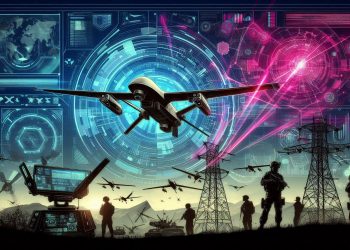
In defense field, India imports variety of advance equipment from Israel. These include: Israeli Phalcon AWACS (Airborne Warning and Control Systems), Heron drones, Barak anti-missile defense systems, Python -5 BVRAAM, Spice-2000 Guided bombs, Popeye-1 Air to Surface missiles (ASM), Griffin Guided bombs, Spike anti-tank guided missiles, SkyStriker loitering munition unmanned aerial vehicles, Harop and Heron sensors and radars, Negev light machine guns, etc. Israel has actively participated in India’s ‘Make in India’ co-production enterprise. Over 40% of Israel’s defense exports meant for other countries are to India exclusively. Both during Operation Sindoor of 2025 as well as during Kargil War of 1999, Israel provided laser-guided missiles and UAVs including valuable spare parts and other equipment at crucial junctures. The Israeli defense companies have established partnerships with Indian forms: Bharat Forge, Tech Mahindra, Adani Group, and Tata Advanced Systems in manufacturing specialized sub-systems.
IMEC and I2U2 Factors
At the G-20 summit meeting in Delhi in 2023, a landmark India-Middle East- Europe Economic Corridor (IMEC) agreement was signed by relevant stakeholders for increasing connectivity across Asia and Europe including the Gulf, West Asia and the Mediterranean. For Israel, IMEC is an opportunity to transition from ‘Island Economy’ to a ‘Land-Sea Hinge’. Prime minister Benjamin Netanyahu has called IMEC as ‘the greatest project of the 21st century’. IMEC provides diversification and leverage beyond the US and East Asia and provides paves the way for more pipelines, greater volume of container shipments, reduced tariffs, and quicker delivery. Israel is already working on a rail line near Beir She’an to connect with Jordan and in exploring other solutions beyond rail.
Apart from enhanced railways, IMEC will provide digital connections, customs digitalization, green energy, undersea cables and energy infrastructure.Through cargo rail, IMEC can integrate between Haifa and Ashdod, Israel’s third and sixth largest cities. Israel can also facilitate Jordan in the latter’s National Railway Project with the European Union’s Global Gateway Initiative and by providing a financial framework for the projected USD$5 billion expenseand in courting sovereign wealth funds including Public Investment Fund, Abu Dhabi Developmental Holding Company and Mubadala. Israel can benefit immensely as its main port Haifa (being operated by a consortium comprising Adani Ports and Special Economic Zone (APSEZ) and Israel’s Gadot Group.It is to be noted, however, that the future of IMEC is tied intricately to the process of political reconciliation and possible expansion of Abraham Accords and in more Arab countries’ willingness aimed at rapprochement with Israel. As for I2U2, (also, known as West Asian Quad, Middle East Quad), which constituted of India, Israel, UAE and USA, was another multilateral grouping that was founded in 2021, was meant for fostering enhanced economic cooperation and regional stability and by focusing on targeted sectors such as water, energy, transportation, health, food security, space , green technology, low-carbon development and sustainable measures pertaining to climate change.
Educational and Cultural Exchanges
In the last two decades, there has been a perceptible growth in cultural and educational interactions between India and Israel focusing on arts, literature, youth and student exchanges as well as in people-to-people exchanges. Academic ties have flourished through institutional mechanisms like SPARC scheme, Vajra Faculty programs, and joint research under India’s University Grants Commission and Israel Science Foundation (ISF). Indian students constitute the largest contingent among incoming foreign students and scholars to Israel even outpacing those from China. 85,000 Jews of Indian origin live in Israel enriching the rich cultural ethos of Israel. At the India end, there is a need for more centers to teach Hebrew language, study on holocaust, as well as critical discourse on various facets of Judaism. An interfaith research center on three monotheistic religions, namely, Christianity, Islam and Judaism, with Jerusalem being the common holy place, can be considered by the competent bodies at both ends. Similarly, Military history, War history, study of mountain warfare, can be areas of research at think tanks in India in collaboration with their counterparts in Israel. A study of genealogy of Jewish roots emanating from India, such as, Bene Israeli, Bnei Menashe, Baghdadi Jews, Chennai Jews, Nagercoil Jews, Jews of Goa, etc; can also be subject of further academic research.
Israel spends considerably higher amount of its budget to the tune of USD $31 billion on the education sector while India’s spends approximately USD$15 billion. Perhaps, a higher budget outlay could be considered by the Ministry of Education in Delhi to enhance India-Israeli educational cooperation. India’s ICCR has instituted TAU India Chair at University of Tel Aviv in 2025. Joint research funds of USD$ 5 million a year for advanced research at Israel’s Ben-Gurion University, Technion, Haifa University, Bar Ilan University, Hebrew University, and at India’s IITs, IIM-Bangalore, JNU, Bennet U, Amity U, etc; are welcome steps. ‘India Corners’ are established at major Israeli centers to share and disseminate knowledge. For boosting Skill Development initiatives, India-Israel Innovative Hubs have been created to promote startups and entrepreneurship training. In alignment with India’s New Education Policy, NEP-2020, Indian universities are contemplating to open campuses in Israel as well. Embassy of India in Tel Aviv offer regular Yoga lessons as well as language courses in Hindi and Marathi. Although Israel is considered to be a viable hard power, it may make use of soft power capabilities as displayed effectively by India to the country’s(Israel’s) advantage for better management of crisis and for wider global outreach.
Challenges and The Way Forward
There are onerous challenges in the bilateral relationship which include: India supporting two-state solution for sovereign, independent Palestine alongside a fully secured Israel based on pre-1967 borders with agreed-upon adjustments, emphasizing diplomacy and dialogue along with humanitarian aid for Gaza, divergent policy orientations on Iran where India has a huge stake in the future of Chabahar port and millions of Indian expatriates working in the gulf countries, continued energy supply and its possible disruption due to uncertainty and unpredictability in regional geopolitics , China still being the biggest trade partner of Iran, India’s non-defense trade volume at a minimal level as of date, differences on the issue of intellectual property rights and the future of Gaza Board of Peace Talks as proposed by President Trump, the slow and tardy process of negotiations in having a Free Trade Agreement between India and Israel. Yet, a flexible and more practical policy approaches by the governments of India and Israel, and closer collaborative arrangement including at the trade and defense sectors at the governmental, business and people-to-people levels and possible movement on ambitious ventures such as IMEC are likely to propel the relationship to greater heights in the short to medium term.