

INTRODUCTION
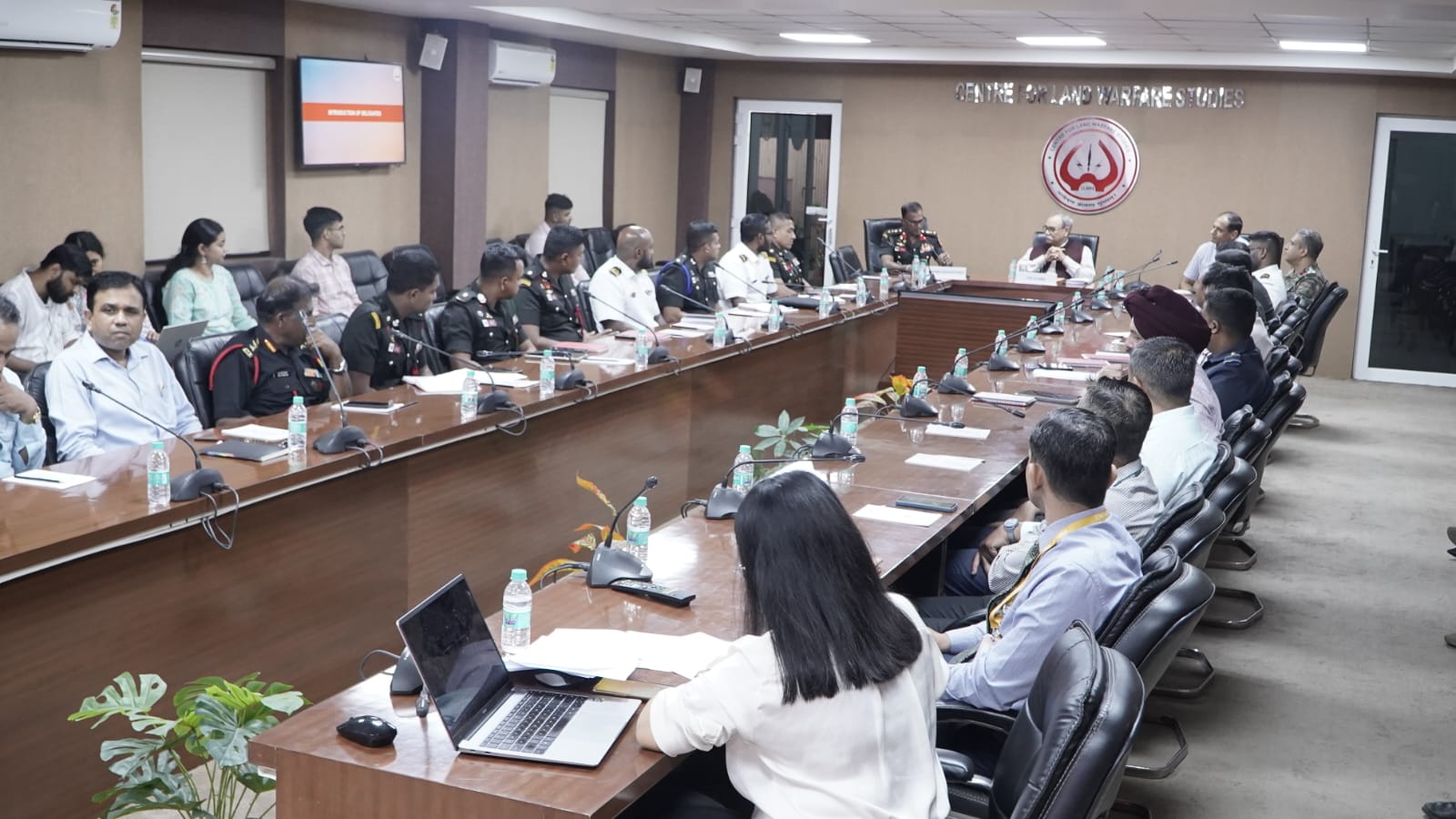
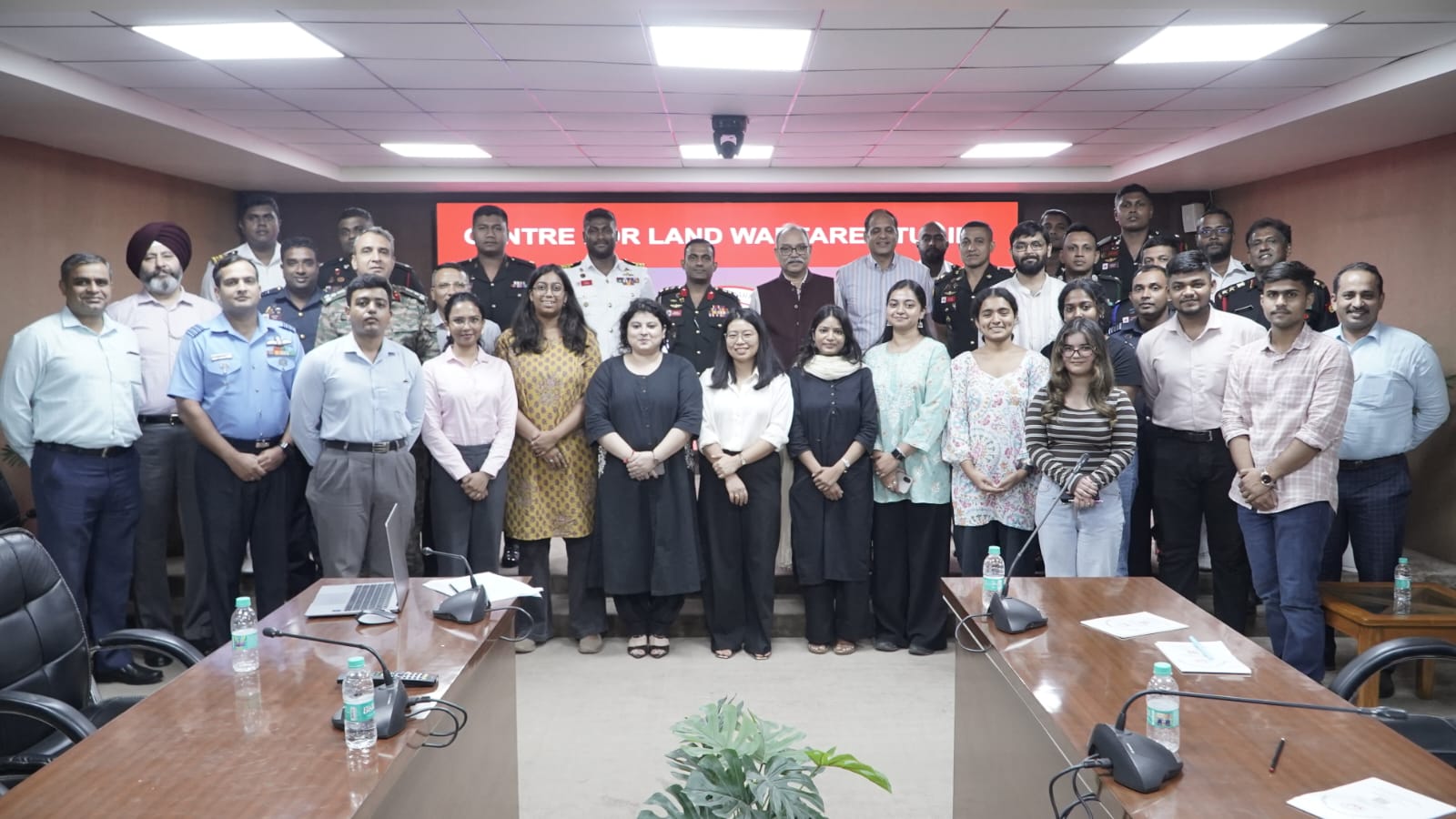
On 30 July 2026, the Centre for Land Warfare Studies (CLAWS) hosted a delegation from the Defence Services Command and Staff College (DSCSC), Sapugaskanda, Sri Lanka, for a roundtable discussion on India–Sri Lanka relations and strategic cooperation in the Indian Ocean Region (IOR). The delegation, led by Col. DMVMR Dissanayake RWP RSP psc, comprised officers and student officers of the DSCSC. The event commenced with the DG CLAWS delivering the welcome remarks, followed by presentations from the Sri Lankan delegation and CLAWS. The engagement served as an important platform to strengthen professional military exchanges and deepen mutual understanding of the evolving regional security environment.
KEY TAKEAWAYS
- Changing character of warfare: Modern conflict is increasingly multi-domain, spanning cyber, information, space and cognitive dimensions, alongside non-traditional threats such as pandemics, with asymmetric and grey-zone warfare gaining prominence.
- Land remains the decisive domain: Despite advances in AI, autonomous systems and non-contact means of conflict, the ultimate objective of war continues to revolve around control of territory and strategic resources, as reaffirmed by the Russia–Ukraine conflict.
- Resource competition drives geopolitics: Rivalry over oil, rare earth minerals and other strategic materials will continue to shape geopolitical competition.
- Three trends shaping the strategic environment: First, technology is evolving at an unprecedented pace, requiring militaries to institutionalise mechanisms that anticipate change. Second, the relationship between economics and geopolitics has undergone a role reversal, with geopolitical developments increasingly driving economic outcomes. The Russia-Ukraine conflict and tensions around the Strait of Hormuz impacted on global energy and food security, demonstrating how geopolitical crisis is now shaping the global economy. Third, the four principal drivers of the emerging global order are technology, civilisation, resources and human capital.
- Broad and deepening defence cooperation: India–Sri Lanka ties span defence dialogues, joint exercises, capacity-building, training programmes and HADR, reflecting growing strategic convergence in the IOR.
- Maritime cooperation as the anchor: Coordinated maritime activities, naval engagement, maritime domain awareness and the security of sea lines of communication underpin a shared commitment to peace and stability in the region.
KEY RECOMMENDATIONS
- Sustain regular dialogue, military diplomacy and academic collaboration to further strengthen India–Sri Lanka defence relations.
- Promote professional military education and continued academic engagement between the armed forces and institutions such as CLAWS, which are invaluable in helping military professionals navigate the changing character of warfare.
- Remain future-oriented by institutionalising mechanisms to anticipate emerging changes while drawing on lessons from the past.
- Develop skilled human capital and harness the demographic dividend to leverage technological change and sustain strategic competitiveness.
- Foster continued cooperation in addressing the evolving security challenges of the Indo-Pacific and the Indian Ocean Region, thereby enhancing regional stability.