
Abstract
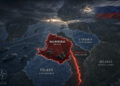
Kaliningrad represents a significant geopolitical paradox, serving as a strategic Russian military outpost in Europe while remaining geographically isolated from mainland Russia. Surrounded by NATO member states Poland and Lithuania, the exclave provides Moscow with an important foothold in the Baltic Sea but simultaneously exposes its logistical and security vulnerabilities. The growing confrontation between Russia and NATO, intensified by the Russia–Ukraine war, has heightened regional instability. Military deployments, transit restrictions, nuclear rhetoric and the strategic importance of the Suwałki Gap further complicates the security environment. These developments highlight the evolving security dilemma and the potential implications of escalating tensions for European security and regional stability. Further, the strategically significant Suwałki Gap, a narrow corridor between Poland and Lithuania, connects the Baltic states with the rest of NATO territory while lying between Kaliningrad and Belarus. Its vulnerability to potential military disruption further intensifies the strategic competition between Russia and NATO, thus making it a critical factor in shaping security dynamics across the Baltic region.
Keywords: Kaliningrad, Russia–NATO Relations, Baltic Sea Security, Suwałki Gap, European Security