

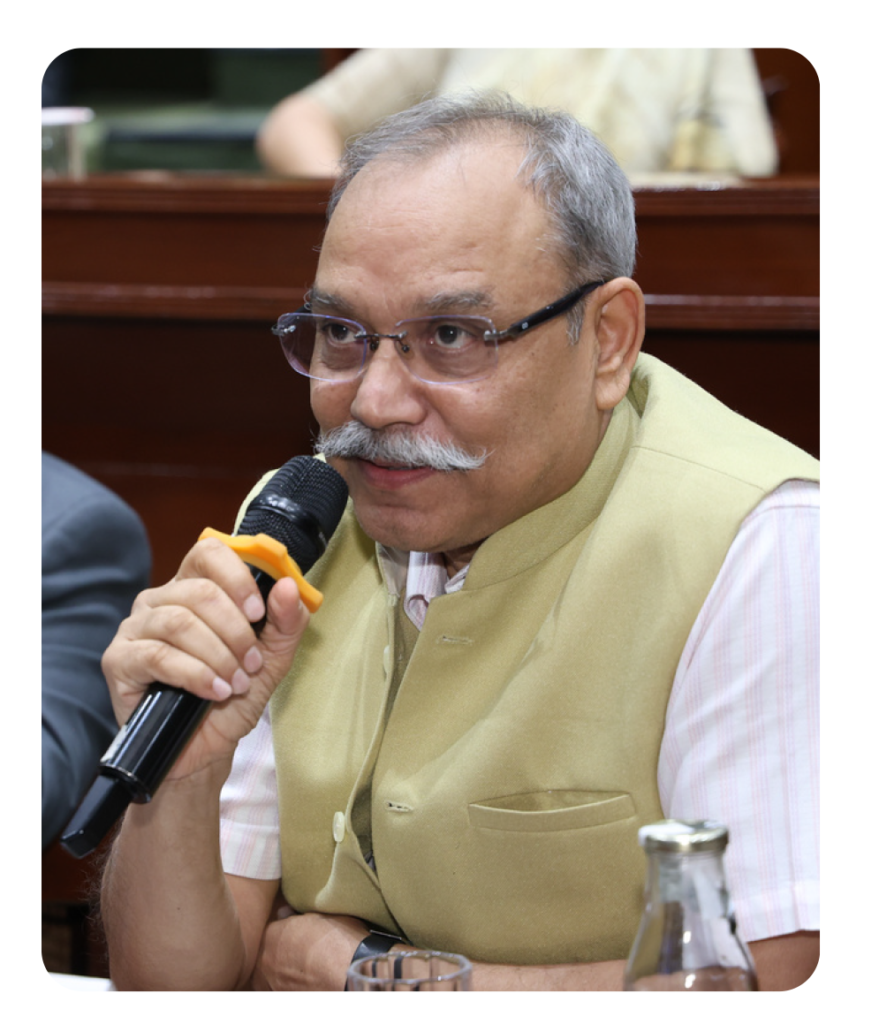
Lt. Gen Dushyant Singh challenged the prevailing perception that veterans have little further to contribute postservice, noting that a significant number continue to self-fund incubation centres and think tanks, citing his own early contribution toward establishing a think tank in Lucknow that has since gained institutional credibility.
His central recommendation was structured civil-military fusion: since many veterans are already employed within defence industries, they should be actively co-opted into day-to-day problem-definition rather than consulted only at the top of the process
He further argued that veterans’ operational familiarity with legacy systems is an underused asset in an era of rapid technological change, citing veteran involvement in upgrading the Zorawar tank as an example. In extended remarks later in the session, he situated Operation Sindoor as a live demonstration of the depth of automation and networked capability already achieved by the forces, while cautioning that greater capability correlates with greater exposure. He observed that even sophisticated, well-resourced organisations (citing the JLR ransomware incident despite the availability of India’s own software expertise) can be breached arguing that complexity, not culpability, explaining such failures. He credited the forces’ relative success against cyber intrusion to network isolation, minimal external openings, and rigorously enforced process discipline for border indigenous capability development.
His most pointed institutional recommendation was on trust and procurement: he argued that indigenous technology will only mature into a viable industry once the state across every department, service, and public institution commits to placing firm orders with certified indigenous developers. Thus, ceasing the authorize “mixed” or white-labelled solutions dressed as indigenous products, which currently pass certification more easily on the strength of well-documented foreign test reports. He further urged the establishment of formal, structured engagement mechanisms as opposed to reliance on informal recruitment channels to capture the talent of officers’ exiting service. He noted that this cohort, particularly those in the 25–40 age bracket, brings a disproportionately high level of discipline and training, and should be actively engaged both as engineers and as startup founders.
He closed by flagging the absence of adversarial (“black strategy”) thinking in Indian educational institutions, arguing that an excessive institutional focus on procedural correctness and ethics leaves India unprepared for adversaries who operate by no such constraint.