Tuesday, September 15, 2026
Advertise with us
Support us
Write for us
No Result
View All Result
claws
  • Home
  • About Us
    • Director General
    • Additional Director General
    • Jottings by Director General Emiritus
    • CLAWS Membership
    • Faculty
  • Publication
    • Web Articles
    • Issue Briefs
    • Manekshaw Papers
    • Newsletter
    • Essay
    • CLAWS Journal
    • Scholar Warrior
    • Books
    • Intern Articles
    • External Publications
  • Research Areas
    • Global & Regional Security
      • China
      • Pakistan
      • Afghanistan
      • South Asia
      • Indo Pacific
      • US, EU & Russia
      • MENA
      • CAR
    • National Security
      • National Security Strategy
      • Nuclear Deterrence
      • Non Traditional Threats
      • Intelligence
      • Terrorism & Internal Security
      • Grey Z & IW
      • Security Laws
    • Military Studies
      • Military Doctrine
      • Military Strategy
      • Peace Keeping Ops
      • Military History
      • Military Logistics
      • Out of Area Contingency Ops
      • Leadership
    • Military Technology & Defence Acquisition
      • Military Technology
      • Defence Acqn
      • Budgets & Finance
      • Defence Infrastructure
      • Human Resources
    • Multi Domain Studies
      • Jointmanship & Integration
      • Space
      • Cyber
      • Spl Operations
      • Energy & Environment
      • Defence Eco System
      • Defence Diplomacy
      • HADR
  • Web Archive
  • Events
    • Seminars
    • Webinars/RTD
  • PROMEX
  • University Cell
    • About The Initiative
    • Admission: Eligibility and Procedure
    • Guides | Supervisors in the PhD Programme:
    • Important Information
    • Administration
    • Application Fee: Batch – 10 Onwards
  • Careers
  • Contact
  • Home
  • About Us
    • Director General
    • Additional Director General
    • Jottings by Director General Emiritus
    • CLAWS Membership
    • Faculty
  • Publication
    • Web Articles
    • Issue Briefs
    • Manekshaw Papers
    • Newsletter
    • Essay
    • CLAWS Journal
    • Scholar Warrior
    • Books
    • Intern Articles
    • External Publications
  • Research Areas
    • Global & Regional Security
      • China
      • Pakistan
      • Afghanistan
      • South Asia
      • Indo Pacific
      • US, EU & Russia
      • MENA
      • CAR
    • National Security
      • National Security Strategy
      • Nuclear Deterrence
      • Non Traditional Threats
      • Intelligence
      • Terrorism & Internal Security
      • Grey Z & IW
      • Security Laws
    • Military Studies
      • Military Doctrine
      • Military Strategy
      • Peace Keeping Ops
      • Military History
      • Military Logistics
      • Out of Area Contingency Ops
      • Leadership
    • Military Technology & Defence Acquisition
      • Military Technology
      • Defence Acqn
      • Budgets & Finance
      • Defence Infrastructure
      • Human Resources
    • Multi Domain Studies
      • Jointmanship & Integration
      • Space
      • Cyber
      • Spl Operations
      • Energy & Environment
      • Defence Eco System
      • Defence Diplomacy
      • HADR
  • Web Archive
  • Events
    • Seminars
    • Webinars/RTD
  • PROMEX
  • University Cell
    • About The Initiative
    • Admission: Eligibility and Procedure
    • Guides | Supervisors in the PhD Programme:
    • Important Information
    • Administration
    • Application Fee: Batch – 10 Onwards
  • Careers
  • Contact
No Result
View All Result
CLAWS
No Result
View All Result
Home Articles

Germany’s Strategic Focus on India: Charting the Future of Bilateral Cooperation

Khushboo Sen DhuruvbyKhushboo Sen Dhuruv
September 15, 2026
in Articles
A A
0
Post Views: 44

Abstract

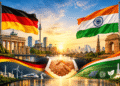
Germany’s Zeitenwende literally a “turning point” or major shift was announced by former chancellor Olaf Scholz following Russia’s invasion of Ukraine in February 2022. It reoriented Berlin’s foreign policy towards hard security, resilient supply chains and diversified partnership with like- minded partner countries. In this changing security environment, India’s emergence as an “active shaper of International politics”, together with its expanding relations with Germany, has acquired growing geostrategic relevance. 75 years of diplomatic engagement, established in March 1951, have anchored India-Germany relations support for a rules-based order, democratic values and multilateralism. Over 25 years as strategic partners since 2000, the relationship has evolved from predominantly economic association into an increasingly important strategic partnership amid global security challenges. The regular “Intergovernmental Consultations” initiated in 2011, have further institutionalised high-level engagement and expanded the scope of bilateral cooperation.

India-Germany Strategic Calculus

Germany is India’s 8th largest trading partner and 9th largest Foreign Direct Investor. It is regarded as one of the most important European partners, particularly in  economic reform, energy transition and research and technology. With more than 2000 German companies operating in India, India’s large and expanding market remains a major economic priority for Berlin.

As the world most populous country, a major growing economy and an increasingly influential geopolitical actor, India seeks to navigate strategic competition without compromising its national interests or relations with diverse partners. Its policy of strategic autonomy allows New Delhi to maintain engagement across major centre powers while avoiding formal alliance commitments. India’ technological capabilities, economic potential, skilled workforce, and strategic location in the Indo-pacific further enhanced its global relevance.  Its participation in influential multilateral and minilateral platforms, including G-20, BRICS, SCO, and QUAD, reflects its growing ability to shape international agendas. Consequently, India has become a significant partner in Germany’s economic, political and foreign-policy calculations.

In 2024, German Government adopted its “Focus on India” strategy  highlighting the country’s strategic importance to German foreign policy. As a democratic partner and important voice of the Global South, India is increasingly central to Germany’s efforts to advance stability, economic diversification and international cooperation.

The bilateral high-level visits and ministerial exchanges have reinforced this strategic momentum. The January 2026 visit of Chancellor Friedrich Merz to New Delhi, reflected a more practice and security-oriented approach to their bilateral engagement. Both sides have sought to enhance dialogue on climate, cybersecurity, counterterrorism and regional security, and strengthen local diplomatic cooperation. The establishment of a “Track 1.5 Foreign Policy and Security Dialogue”, combining official and expert-level engagement, offer an important platform for sustained discussion among policymakers, industry leaders, academia, media professionals and civil society.

Security and Defence Cooperation

India and Germany share a mutual interests in preserving a rules-based international order, particularly in the Indo-Pacific. Germany’s expanding Bundeswehr presence in the regions hold strategic relevance for India and creates opportunities for greater military to military cooperation through joint exercise, training, exchanges of officials and naval visits. Defence cooperation has also begun to more dialogues towards industrial and technological collaboration. Potential areas include, reciprocal logistic arrangements, liaison mechanisms at “India’s Information Fusion Centre–Indian Ocean Region (IFC-IOR)” and expanded defence-Industrial cooperation between “Defence Research and Development Organisation (DRDO) and Organisation for Joint Armament Cooperation (OCCAR)”.Their engagement on the “Eurodrone MALE UAV programme” could provide India greater access to advanced military technologies while strengthening cooperation European defence partners.

Ongoing discussions on submarines, helicopter obstacle avoidance systems, and Counter-Unmanned aerial systems  (C-UAS) also indicate the potential for a more substantive defence partnership. India’s skilled workforce and competitive production costs can complement Germany’s technology expertise, investment capacity and advanced industrial base.

Technology, Trade and Green Transition

India’s rapidly growing economy and efforts to diversify trade and supply chains make Germany partnership an important economic partner. Both countries support an open, rule-based trading system and seek to reduce market barriers. Their bilateral trade “exceeded USD 50 billion, making Germany India’s largest trade partner within the European Union”.

The two countries are expanding cooperation in renewables, green hydrogen, critical minerals, semiconductors,  artificial intelligence, digital technology, space and e-mobility. The “German-Indian CEO Forum”, can help navigate  structural challenges, encourage business engagement and promote investment in both directions including by German firms in India and Indian businesses in Germany

The fields of Technology and innovation offer another major pillar of the partnership. Advancing cooperation semiconductors ecosystem, the inauguration of Infineon’s “the Global Capability Centre (GCC) in GIFT city and the Indo-German Digital Dialogues”, provide a framework for collaboration in telecommunications and emerging technologies. The Indo-German Science and Technology Centre (IGSTC), Indo-German Centres of Excellence on Innovation (IG-CoE) and India’s participation in major science facility at Facility for Antiproton and Ion Research (FAIR) and Deutsches Elektronen Synchrotron (DESY) demonstrate the breadth of scientific engagement.

Programmes such as “Women Involvement in Science and Engineering Research (WISER)”, also promote greater participation of women in Science and technology. Moreover, Indo-German Cooperation in joint support of third countries, could support  sustainable economic development, climate action, environment protection and energy transition.  The “Green and Sustainable development partnership” has strengthened collaboration on climate change, Sustainable Development Goals (SDGs), biodiversity and natural resources, and the circular economy. Energy security remains a shared priority. “The Indo-Germany Energy Forum” (IGEF), both countries are working on energy efficiency, renewable energy, green hydrogen, financing for clean energy projects, grid integration and  research and development.

Education, Mobility and Research

As both countries prioritise constitutional democracy, fundamental rights and civil-society engagement, these shared commitments provide a wider normative foundation for the partnership. Academic, cultural and education exchanges remains central to their bilateral ties. Institutional international facility such as FAIR in Darmstadt, DESY research centre in Hamburg, German Academic Exchange Service (DAAD), and the IGSTC have contributed to stronger research and educational cooperation. The German Centre for Research and Innovation in New Delhi further supports these linkages.  Germany has emerged an important destinations for Indian students, researchers and skilled professionals. The “India-Germany Comprehensive Migration and Mobility Partnership Agreement (MMPA)” seeks to simplify legal pathways for mobility, employment and research and study, which directly contributing to strengthen people-to-people ties.

Strategic Convergence and Geopolitical Constraints

The Indo-Pacific is another area of strategic convergence. Both sides support a free, open, inclusive, and rules-based regional order based on international law, including the United Nations Convention on the Law of the Sea (UNCLOS). India has welcomed Germany’s engagement under the Capacity Building and Resource Sharing pillar of the Indo-Pacific Oceans Initiative, which is co-led by India and Germany. Both countries also support comprehensive reform of the UN Security Council and regard each other as natural partners in pursuing permanent membership

Despite the strength of the partnership, geopolitical frictions remain. The Russia-Ukraine war has highlighted different approaches to European security. Germany has consistently supported Ukraine’s sovereignty and territorial integrity and condemned Russia’s aggression. India, meanwhile, has maintained a more balanced approach, rooted in strategic autonomy and the prioritisation of national interests, without undermining its longstanding defence and energy ties with Russia.

On other hand, China presents a different but equally significant challenge. India’s troubled relationship with China, and Germany’s efforts to reduce strategic dependency on Chinese supply chains, create incentives for closer Indo-German cooperation in investment, co-development and technological resilience. As Russia has become increasingly reliant on China, following Russia-Ukraine, India’s strategic move towards European countries, particularly Germany remain a necessity.

Conclusion

India and Germany have built a strong partnership based on shared interests, expanding economic ties and growing strategic convergence. While differences in their approaches to Russia and broader geopolitical priorities will persist, Berlin’s Focus on India strategy underscores India’s  indispensable role in Germany’s future engagement with the Indo-pacific, Global South and an increasingly contested international order.

Tags: 75 Years Diplomatic tiesDefense CooperationForeign PolicyGeopoliticsGermanyIndiaIndo-German RelationsStrategic Partners
Previous Post

India’s BRICS Moment: Navigating a Changing Global Order

Next Post

The Evolution of Russia’s Support for Myanmar’s Military Regime Since 2021

Khushboo Sen Dhuruv

Khushboo Sen Dhuruv

Khushboo Sen Dhuruv is a Research Assistant at the Centre for Land Warfare Studies (CLAWS), New Delhi. She completed her Ph.D. and M.Phil. from the Centre for European Studies, School of International Studies, Jawaharlal Nehru University. She also holds a Master’s degree in Politics (specialization in International Relations), JNU, and a Bachelor’s degree in Political Science, University of Delhi. Her academic and research interests focus on Europe, EU Foreign, Security and Defense Policy, Russia, Transatlantic Partnership, and India-EU relations. Through her work, she engages with contemporary geopolitical and strategic issues shaping European and global affairs. You can reach out to her at [email protected]

Next Post
The Evolution of Russia’s Support for Myanmar’s Military Regime Since 2021

The Evolution of Russia’s Support for Myanmar’s Military Regime Since 2021

Leave a Reply Cancel reply

Your email address will not be published. Required fields are marked *

Support Us Donate Now

Web Updates

CLAWS MAHE PHD PGME | B – 9 Shortlisted Candidates

Field Marshal Manekshaw Essay Competiton 2026

Promotion Exam Correspondence Pre Course (PROMEX)

Guidelines to Publish with CLAWS

Application Form – Study Mtrl for DSSC 2026

[NEW] Application Form for membership for PROMEX (PART B or D)

  • Trending
  • Comments
  • Latest
Russia-Ukraine War: Lessons from an Electronic Warfare (EW) Perspective

Russia-Ukraine War: Lessons from an Electronic Warfare (EW) Perspective

May 31, 2025
Field Marshal Manekshaw Essay Competiton 2026

Field Marshal Manekshaw Essay Competiton 2026

April 23, 2026
Results | Field Marshal Manekshaw Essay Competition – 2024

Field Marshal Manekshaw Essay Competiton 2025

May 23, 2025
Op Sindoor 2.0: Why & How India Must Prepare for the Next Round?

Op Sindoor 2.0: Why & How India Must Prepare for the Next Round?

May 21, 2025
From Sword Clashes to Drone Strikes: A History of Changing Battlefields

From Sword Clashes to Drone Strikes: A History of Changing Battlefields

15
The Arakan Army and Its Impact on India: Rising Tensions Along the Eastern Frontier 

The Arakan Army and Its Impact on India: Rising Tensions Along the Eastern Frontier 

5

Thwarting  Pakistan’s Nefarious Designs in Bangladesh

5
India’s Pursuit of Self-Sufficiency in Rare Earth and Critical Minerals: South Caucasus as an Option

India’s Pursuit of Self-Sufficiency in Rare Earth and Critical Minerals: South Caucasus as an Option

3
The Evolution of Russia’s Support for Myanmar’s Military Regime Since 2021

The Evolution of Russia’s Support for Myanmar’s Military Regime Since 2021

September 15, 2026
Germany’s Strategic Focus on India: Charting the Future of Bilateral Cooperation

Germany’s Strategic Focus on India: Charting the Future of Bilateral Cooperation

September 15, 2026
India’s BRICS Moment: Navigating a Changing Global Order

India’s BRICS Moment: Navigating a Changing Global Order

September 10, 2026
National Capacity for Maneuver: India’s Strategic Perspective

National Capacity for Maneuver: India’s Strategic Perspective

September 10, 2026

Popular Stories

  • Russia-Ukraine War: Lessons from an Electronic Warfare (EW) Perspective

    Russia-Ukraine War: Lessons from an Electronic Warfare (EW) Perspective

    0 shares
    Share 0 Tweet 0
  • Field Marshal Manekshaw Essay Competiton 2026

    0 shares
    Share 0 Tweet 0
  • Field Marshal Manekshaw Essay Competiton 2025

    0 shares
    Share 0 Tweet 0
  • Op Sindoor 2.0: Why & How India Must Prepare for the Next Round?

    0 shares
    Share 0 Tweet 0
  • From Sword Clashes to Drone Strikes: A History of Changing Battlefields

    0 shares
    Share 0 Tweet 0

About us

CLAWS

The Centre for Land Warfare Studies (CLAWS), New Delhi, India is an independent think tank on strategic studies and land warfare. The mandate of CLAWS covers national security issues, conventional military operations and sub-conventional warfare.

Browse by Category

  • Articles
  • Autumn 2019
  • Autumn 2020
  • Books
  • Chanakya Defence Dialogue
  • CLAWS Focus
  • CLAWS Journal
  • Essay
  • Events
  • External Publications
  • FMMEC
  • Intern Articles
  • Issue Briefs
  • Jottings by Director General Emiritus
  • Manekshaw Papers
  • Newsletter
  • Round Tables
  • Scholar Warrior
  • Seminars
  • Uncategorized
  • Web Updates
  • Winter 2019
  • YouTube Podcast

Recent News

The Evolution of Russia’s Support for Myanmar’s Military Regime Since 2021

The Evolution of Russia’s Support for Myanmar’s Military Regime Since 2021

September 15, 2026
Germany’s Strategic Focus on India: Charting the Future of Bilateral Cooperation

Germany’s Strategic Focus on India: Charting the Future of Bilateral Cooperation

September 15, 2026
  • Site Map
  • Tenders
  • Advertise With Us
  • Terms of use
  • Privacy Policy
  • Other Think Tanks

© 2008-2026 Centre for Land Warfare Studies (CLAWS).

No Result
View All Result
  • Home
  • About Us
    • Director General
    • Additional Director General
    • Jottings by Director General Emiritus
    • CLAWS Membership
    • Faculty
  • Publication
    • Web Articles
    • Issue Briefs
    • Manekshaw Papers
    • Newsletter
    • Essay
    • CLAWS Journal
    • Scholar Warrior
    • Books
    • Intern Articles
    • External Publications
  • Research Areas
    • Global & Regional Security
      • China
      • Pakistan
      • Afghanistan
      • South Asia
      • Indo Pacific
      • US, EU & Russia
      • MENA
      • CAR
    • National Security
      • National Security Strategy
      • Nuclear Deterrence
      • Non Traditional Threats
      • Intelligence
      • Terrorism & Internal Security
      • Grey Z & IW
      • Security Laws
    • Military Studies
      • Military Doctrine
      • Military Strategy
      • Peace Keeping Ops
      • Military History
      • Military Logistics
      • Out of Area Contingency Ops
      • Leadership
    • Military Technology & Defence Acquisition
      • Military Technology
      • Defence Acqn
      • Budgets & Finance
      • Defence Infrastructure
      • Human Resources
    • Multi Domain Studies
      • Jointmanship & Integration
      • Space
      • Cyber
      • Spl Operations
      • Energy & Environment
      • Defence Eco System
      • Defence Diplomacy
      • HADR
  • Web Archive
  • Events
    • Seminars
    • Webinars/RTD
  • PROMEX
  • University Cell
    • About The Initiative
    • Admission: Eligibility and Procedure
    • Guides | Supervisors in the PhD Programme:
    • Important Information
    • Administration
    • Application Fee: Batch – 10 Onwards
  • Careers
  • Contact

© 2008-2026 Centre for Land Warfare Studies (CLAWS).