
Introduction
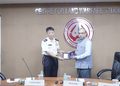
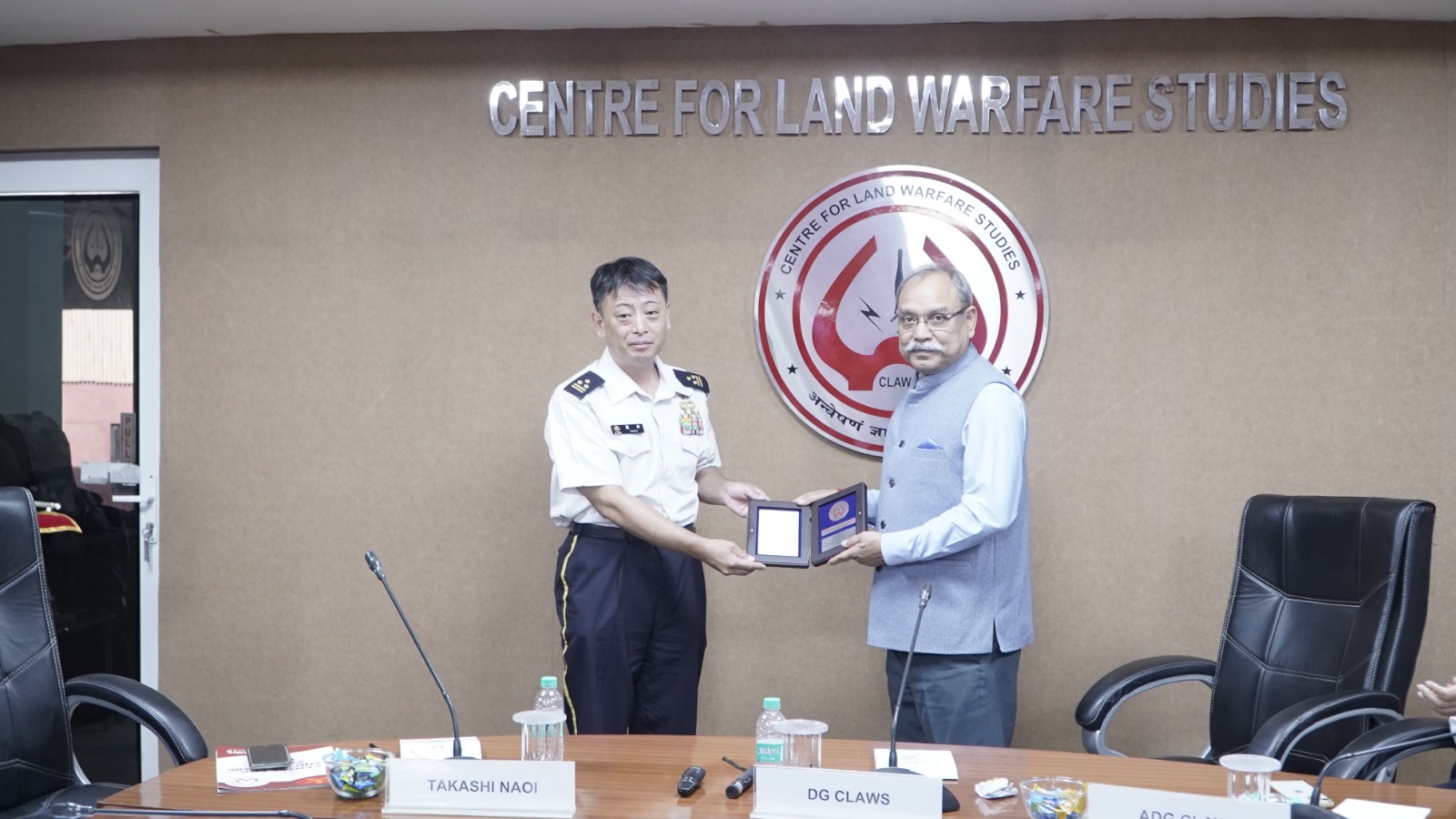
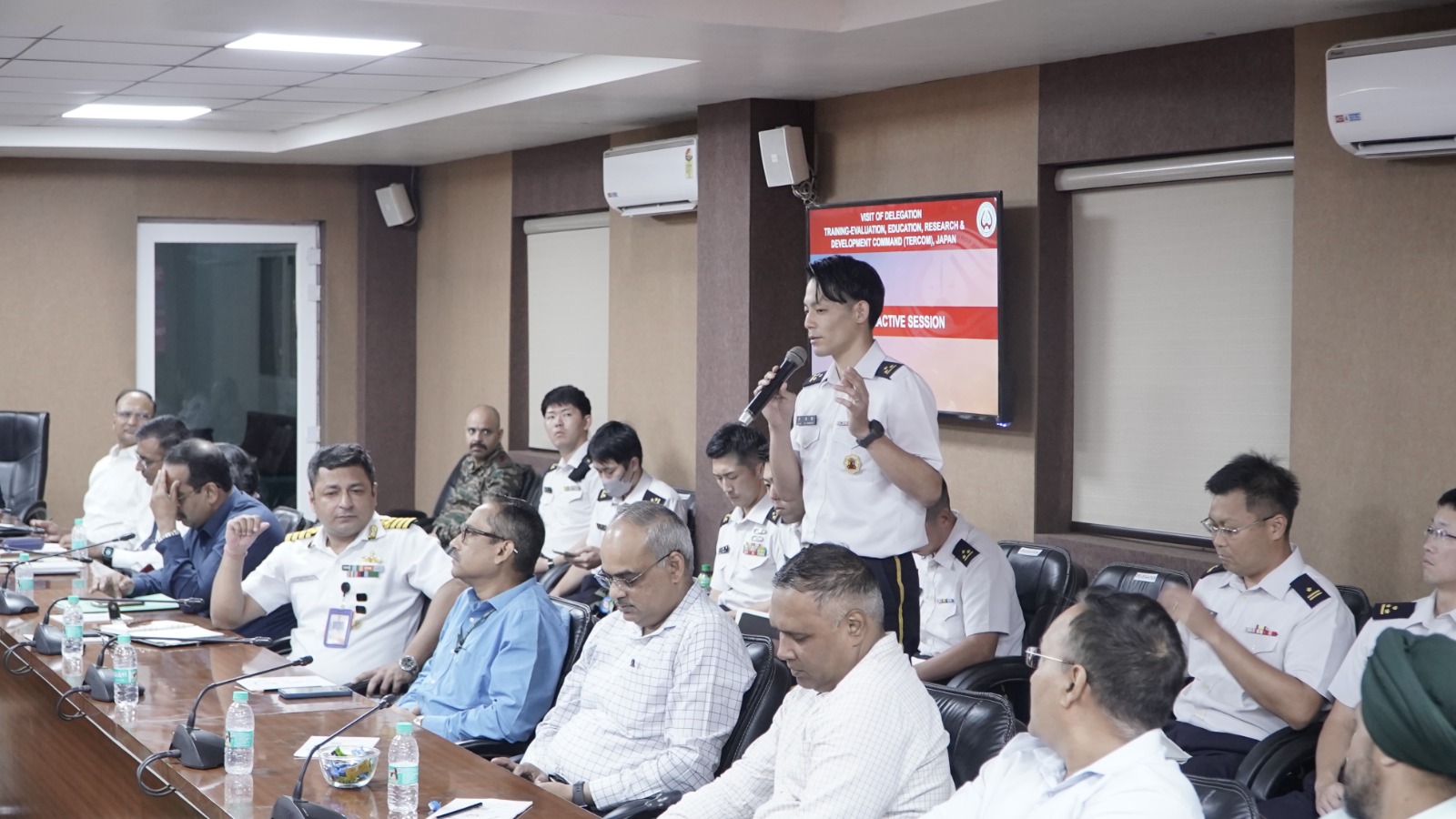
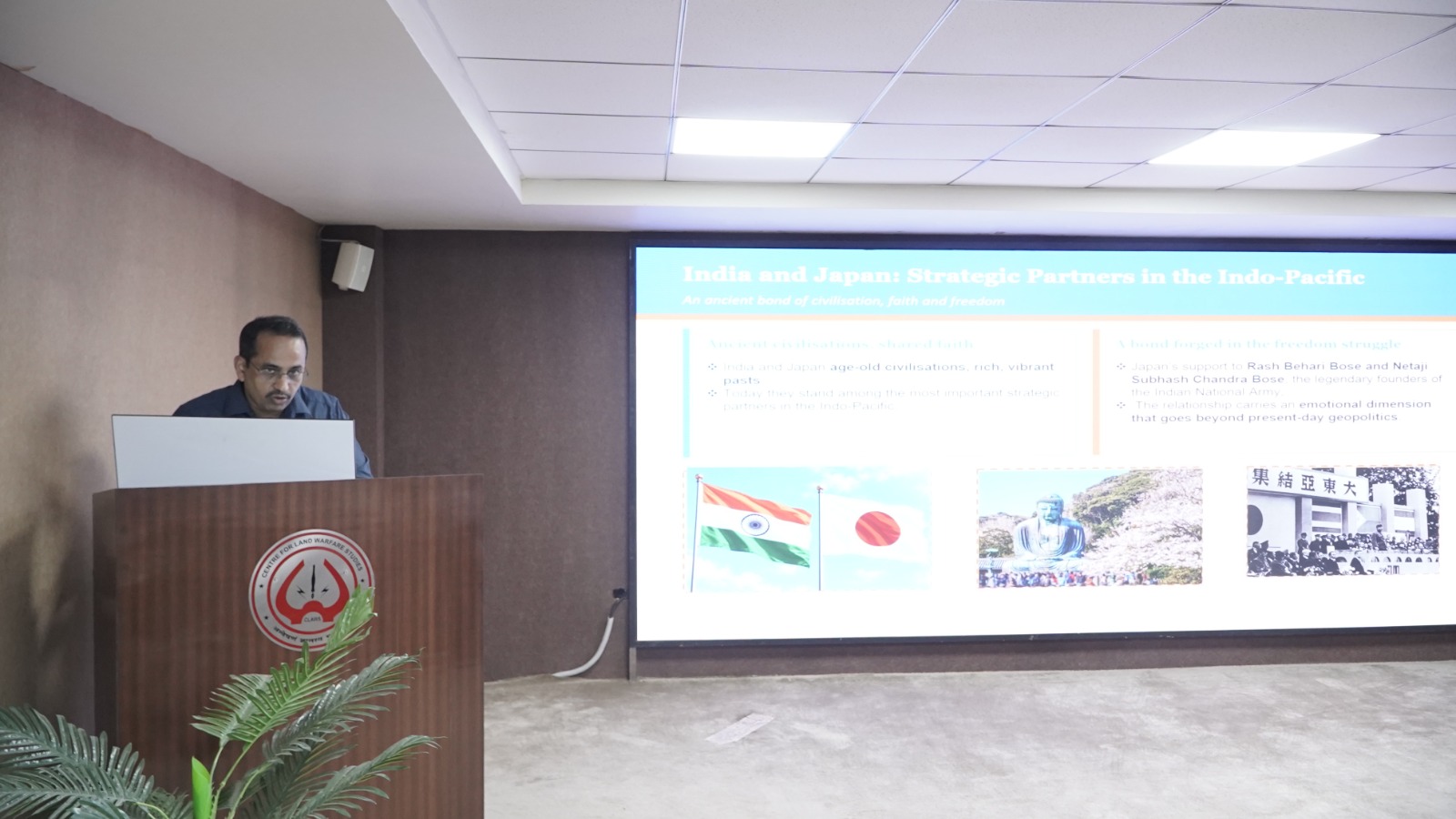
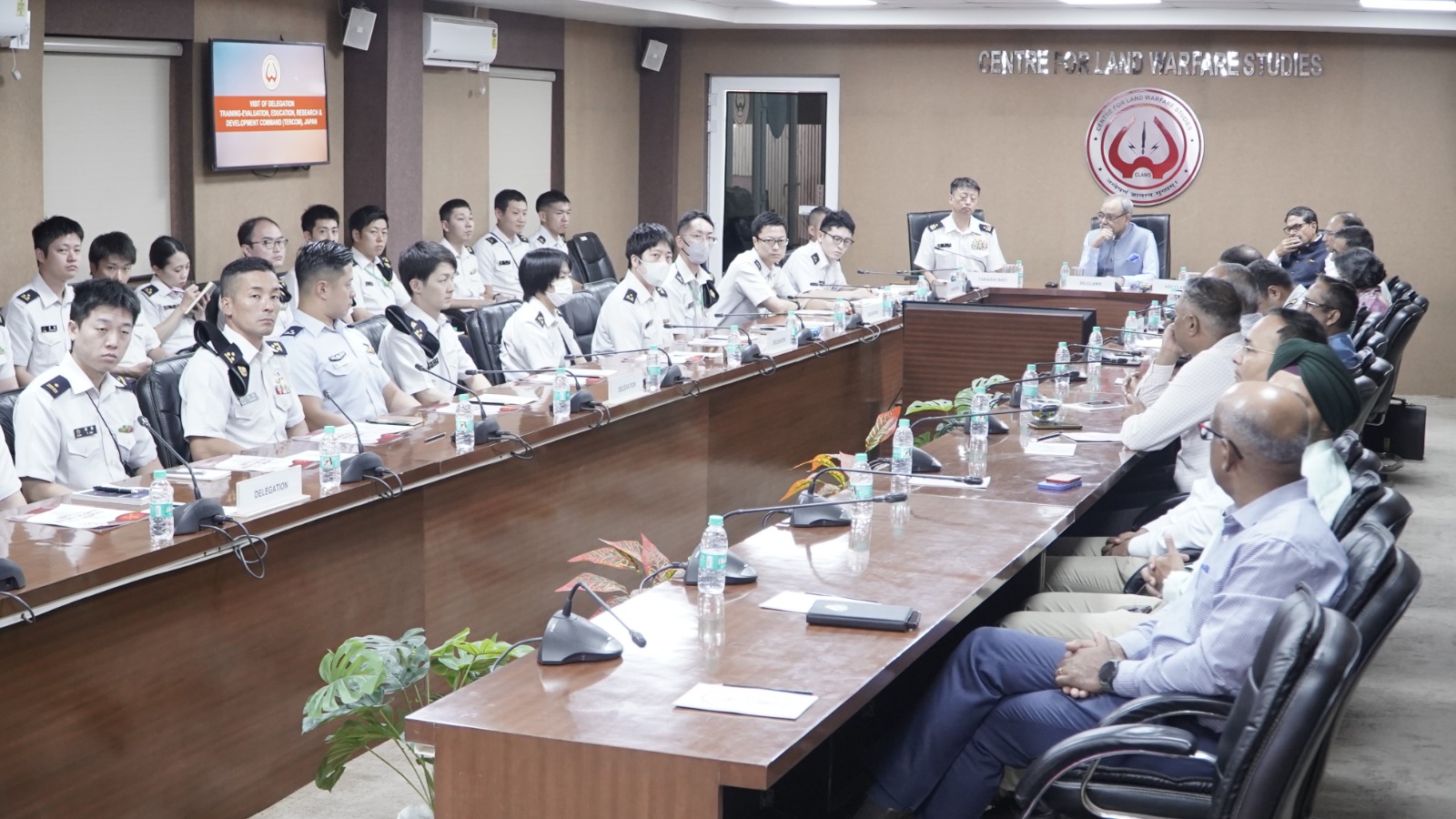
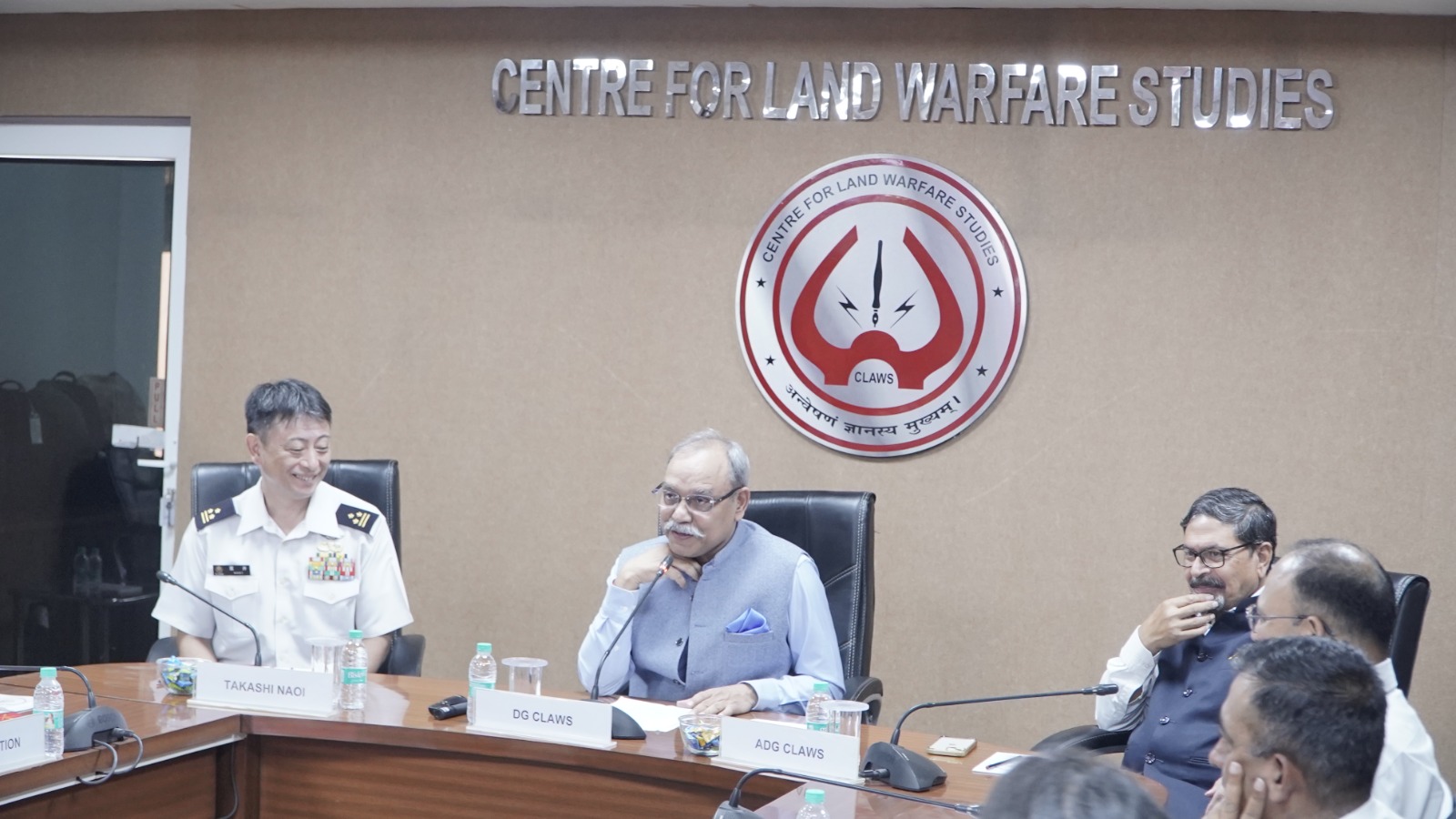
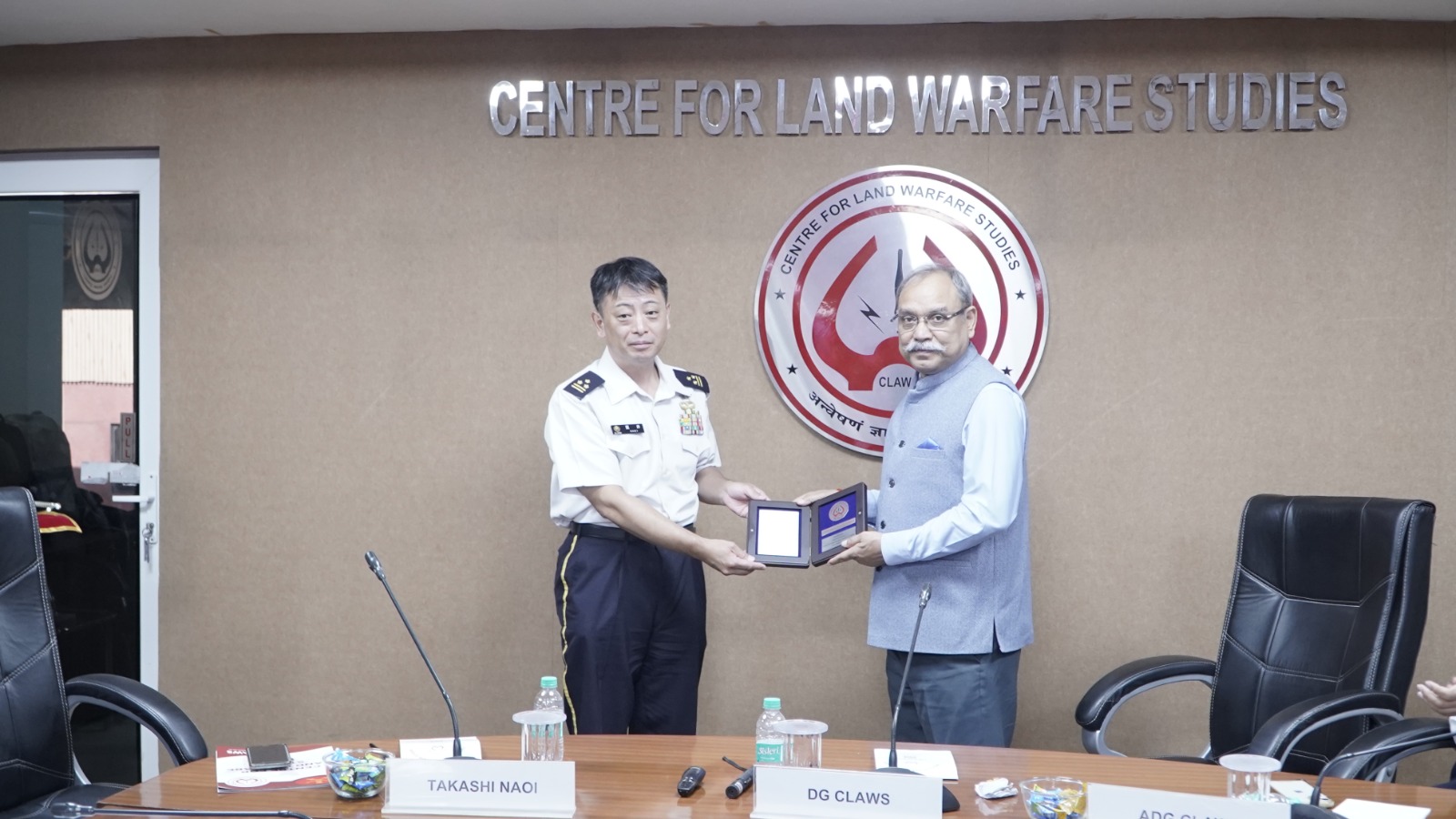
The Centre for Land Warfare Studies hosted a delegation from the Japan Ground Self Defense Force (JGSDF) at Chanakya Hall on 7 October 2026. The delegation was led by Colonel Takashi Naoi, Instructor, Command and General Staff Course, Training Evaluation, Education, Research and Development Command (TERCOM). Lieutenant General Dushyant Singh, PVSM, AVSM (Retd), Director General, CLAWS, delivered the welcome remarks, while Mr Mehul Singh Gill, Research Assistant, CLAWS, presented an overview of the Centre and conducted the proceedings. The Japanese delegation presented on Japan’s Experience in Training Human Resources for the Changing Nature of Warfare, covering Japan’s security environment, defence strategy, JGSDF force development and the role of TERCOM in professional military education. Lt Col Nishant Kumar, Senior Fellow, CLAWS, subsequently spoke on India–Japan Defence Cooperation. The programme concluded with an interactive session and concluding remarks by Maj Gen RPS Bhadauria, VSM (Retd), Addl Director General, CLAWS.
Discussion
The Japanese delegation outlined Japan’s evolving security environment, highlighting increasing military activity in its neighbourhood, multi-domain threats and the importance of its southwestern territories. Japan’s defence approach was described through three broad pillars: strengthening its national defence posture, deterrence and response through the Japan–US alliance, and cooperation with like-minded partners. The JGSDF’s capability development is focused on areas including stand-off defence, integrated air and missile defence, unmanned systems, cross-domain operations, command and control and intelligence, mobile deployment and civil protection, and sustainability and resilience. Particular emphasis was placed on TERCOM, which serves as the JGSDF’s core institution for education, research and development, training evaluation and lessons learned. The Command and General Staff Course, conducted since 1955, prepares officers for higher command and staff responsibilities and covers international security studies, military theory, command and control, military history, leadership and comprehensive defence research. Lt Col Nishant Kumar’s presentation traced the evolution of India–Japan defence cooperation from strategic dialogue towards a broader defence ecosystem encompassing exercises, maritime security, technology and industrial cooperation. Exercises such as Dharma Guardian, JIMEX and Veer Guardian were highlighted as contributing to greater interoperability, while cooperation has increasingly expanded towards co development, co-production, defence R&D, unmanned systems and maritime security. The interactive session focused on respective threat perceptions and the changing character of warfare, particularly the incorporation of cyber, space, artificial intelligence and autonomous systems into military capabilities, doctrine and training. Discussions also examined the importance of stronger collaboration between the armed forces, government and private-sector industry in defence manufacturing and technological innovation. The exchange highlighted the value of continued India–Japan institutional engagement in addressing emerging security challenges and developing capabilities for future warfare.
Key Takeaways
Adapting Professional Military Education to Emerging Warfare. The growing importance of cyber, space, AI, autonomous systems and cross domain operations requires military education and training institutions to continuously adapt their curricula and methods.
India–Japan Defence Cooperation is Expanding Beyond Exercises. Bilateral cooperation is increasingly moving towards defence technology, co development, co-production, maritime security and broader defence-industrial collaboration.
Strengthening Public–Private Defence Innovation. Greater integration between armed forces, government institutions and private industry is important for translating emerging technologies into operational military capabilities.